

Categories
Local Real EstatePublished September 15, 2026
ADU vs. Backyard Cottage in Somerville: What's the Difference?

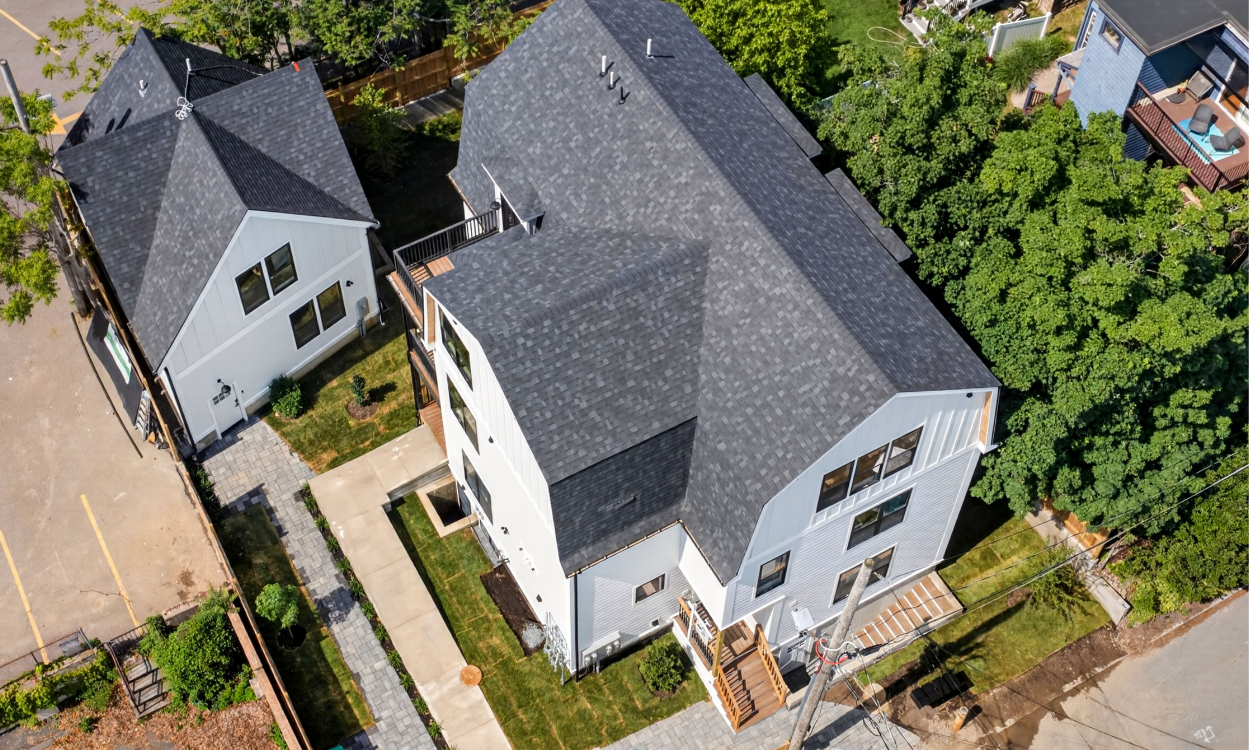
If you've been following housing or zoning conversations in Somerville, you may have heard ADU and backyard cottage used as though they mean the same thing.
They don't. At least, not always.
The easiest way to understand the difference is to separate three ideas: how a space is used, what kind of building it is, and how it is owned.
The Simplest Way to Think About It
- ADU = the dwelling. It is a second, independent home that is accessory to a principal dwelling. It can be inside, attached to, or detached from the main home.
- Backyard Cottage = the building. In Somerville, it is a specific type of detached accessory building. It can contain a dwelling, but it does not have to.
- Condo = the ownership. A residential Backyard Cottage can potentially be established as its own condominium unit and sold separately if the property is legally structured that way.
So the same small house in a backyard could be a Backyard Cottage, contain an ADU, and potentially become its own condo depending on how the property is legally structured.
Confusing? A little. But once you separate use, building type, and ownership, the terminology becomes much easier to understand.
What Is an ADU?
ADU stands for accessory dwelling unit.
Under Massachusetts law, an ADU is a self-contained housing unit located on the same lot as a principal dwelling. It has its own sleeping, cooking, and bathroom facilities and a separate qualifying entrance.
An ADU does not have to be a separate little house in the backyard.
An ADU can be:
- Internal: A portion of a basement or another area inside an existing home converted into an independent dwelling
- Attached: A new independent living space connected to the principal home
- Detached: A separate small dwelling or a unit created in a detached garage or another accessory structure
What makes something an ADU is how the space functions, not whether it is physically separate from the main house.
The other important point is that an ADU is accessory to a principal dwelling. Simply creating an ADU does not automatically create a new, separately saleable piece of real estate.
For the statewide rules on ADU size, owner occupancy, parking, rentals, the Boston exception, and what homeowners should do first, read our complete Massachusetts ADU guide for Greater Boston homeowners.
What Is a Backyard Cottage in Somerville?
Backyard Cottage has a specific meaning in Somerville zoning.
The Somerville Zoning Ordinance describes a Backyard Cottage as a small-floor-plate, detached accessory building located on the same lot as a principal building.
And this is where it differs significantly from the term ADU:
A Backyard Cottage describes the building itself, not necessarily what happens inside it.
Under Somerville's zoning framework, a Backyard Cottage can potentially provide space for:
- One small dwelling unit
- A home occupation
- A playhouse
- Vehicular parking
So if a Backyard Cottage contains a complete independent home, that dwelling may also qualify as an ADU.
If the same building is being used as an office, playhouse, garage, or another permitted nonresidential accessory use, it is still a Backyard Cottage but it is not an ADU.
ADU vs. Backyard Cottage vs. Condo
This is the comparison that makes the terminology much easier to follow:
| Term | What Does It Tell You? | Key Point |
|---|---|---|
| ADU | How the space is used | A second independent dwelling that is accessory to a principal dwelling |
| Backyard Cottage | What kind of building it is | A physically detached accessory building under Somerville zoning |
| Condo | How the property is owned | A separately owned unit that can generally be bought and sold independently |
These categories can overlap.
For example, a detached small home behind another residence could be a Backyard Cottage because of its building form and contain an ADU because it functions as an independent accessory dwelling.
If the property is legally established as a condominium and the cottage becomes its own condo unit, the cottage may then be separately owned and sold.
Can a Somerville Backyard Cottage Be Sold Separately?
Potentially, yes.
This is one of the biggest practical differences for buyers looking at residential Backyard Cottages in Somerville.
A Backyard Cottage can potentially be established as its own condominium unit. When that happens, a buyer may be able to purchase the cottage independently from the larger home on the same original lot.
We've seen this firsthand in the Somerville market. At 16 Hamlet Street, the Backyard Cottage was its own condominium residence rather than simply an accessory space belonging to the larger home.
That can create an unusual property type: a home that physically feels much more like a small detached single-family house but is legally owned as a condo.
Important: Being a Backyard Cottage does not automatically make a property separately saleable. The separate ownership comes from the legal condominium structure, not simply from the fact that the building is detached.
Can an ADU Be Sold Separately?
Not simply because it is an ADU.
Under Massachusetts law, an ADU begins as an accessory dwelling located on the same lot as a principal dwelling. Adding one does not automatically create a separately deeded property that can be sold on its own.
There is an important legal nuance, however. Massachusetts notes that whether a protected ADU can later be converted into a condominium and sold separately is governed by Massachusetts condominium law, rather than by the ADU law itself.
So rather than thinking, "ADUs can never be sold separately," the more accurate rule is:
An ADU designation does not create separate ownership. Separate ownership requires its own legal condominium structure and appropriate approvals.
This is one reason buyers and property owners should never assume that two physically separate homes on the same property can automatically be bought or sold independently.
Can a Backyard Cottage Be an ADU?
Yes.
Imagine a detached cottage behind a Somerville home with its own kitchen, bathroom, sleeping space, living space, and qualifying entrance.
If it meets the applicable requirements, it may be:
- A Backyard Cottage because it is the detached building type
- An ADU because it contains an independent accessory dwelling
If that same property is later legally structured so the cottage becomes its own condominium unit, it may also become a separately owned condo.
Same little building. Three different terms describing three different things.
Can You Have an ADU Without a Backyard Cottage?
Absolutely.
This is another reason the terms should not be used interchangeably.
A Somerville homeowner could potentially create an ADU inside an existing home or as an attached addition without building a Backyard Cottage at all.
For example:
- Basement conversion: A portion of the home becomes a complete independent dwelling
- Attached addition: A connected addition contains its own complete living facilities
- Detached garage conversion: A separate accessory structure becomes an independent dwelling
- New cottage: A new detached small home may potentially qualify as both an ADU and a Backyard Cottage
Massachusetts specifically recognizes internal, attached, and detached ADUs, so the ADU category is much broader than Somerville's Backyard Cottage building type.
What About an In-Law Suite?
An in-law suite is generally an informal real estate term rather than a specific statewide zoning classification.
A basement with a bedroom, bathroom, and sitting area might be described as an in-law suite even though it remains part of the principal dwelling.
If that space is legally created as its own self-contained dwelling with the facilities required for an ADU, it may instead qualify as an ADU.
So the useful question for buyers is not simply what someone calls the space in a listing.
It is how the space is legally permitted, used, and owned.
Is an ADU the Same as Turning a Home Into a Two-Family?
No.
An ADU is a second independent dwelling unit, but Massachusetts zoning allows one qualifying ADU to remain accessory to the principal dwelling.
That means adding a protected ADU does not automatically mean the property has to qualify as a conventional two-family use under local zoning.
A traditional two-family property generally contains two principal dwelling units.
An ADU arrangement instead begins as a principal dwelling plus an accessory dwelling unit.
For buyers, sellers, and homeowners, that distinction can affect zoning, building-code requirements, financing, assessment, ownership structure, and eventual resale.
Didn't Somerville Already Allow Backyard Cottages?
Yes.
Somerville was already allowing Backyard Cottages before Massachusetts created its newer statewide protected-use ADU framework.
Somerville's zoning overhaul established Backyard Cottage as a local detached accessory building type. Then, beginning in February 2025, Massachusetts began protecting one qualifying ADU by right in zoning districts where single-family residential use is permitted.
That statewide protection applies whether the ADU is internal, attached, or detached.
Today, someone evaluating a Somerville property may therefore need to consider both:
- Massachusetts ADU rules governing protected accessory dwelling units
- Somerville zoning and permitting rules governing the physical property and building type
That is why an older Backyard Cottage diagram or listing description should not be treated as a complete answer to what can be built today.
Why This Matters for Somerville Buyers
This terminology becomes much more important when you're considering an unusual property.
If a listing mentions a:
- Backyard cottage
- Accessory dwelling unit
- In-law apartment
- Carriage house
- Additional unit
- Detached condo
do not assume those terms tell you the property's legal status or ownership structure.
Instead, ask a few basic questions.
Is It Legally a Dwelling?
A finished structure is not automatically approved for residential occupancy. Confirm what was permitted and whether the existing use matches the approvals.
What Exactly Are You Buying?
Are you buying the entire property, a condominium unit, an accessory dwelling along with the principal home, or something else?
Can It Be Sold Separately?
Physical separation does not equal legal separation. If independent resale matters, verify whether the cottage is actually its own condominium unit.
What Are the Shared Responsibilities?
Even a detached condo may share land, utilities, driveways, outdoor space, insurance responsibilities, or other common elements with neighboring units.
If Rental Income Matters, Is That Use Permitted?
Do not build a purchase budget around hypothetical rental income until the legal use and any applicable restrictions are confirmed.
A charming little cottage does not become a separately saleable legal residence because someone installed a farmhouse sink and gave it a cute name.
Why This Matters for Somerville Property Owners and Investors
For property owners, separating these concepts makes it easier to define what you are actually trying to accomplish.
Do you simply want more living space?
You may not need an ADU at all.
Do you want a separate legal dwelling that remains part of your property?
An ADU may be the relevant path.
Do you want a detached building?
Somerville's Backyard Cottage rules may become relevant.
Do you ultimately want two separately saleable homes?
Now you're also asking an ownership and condominium question, not merely an ADU or zoning question.
For investors and builders, that distinction matters enormously.
The useful analysis is not simply:
"How many units can we fit?"
It is:
What can legally be built, how can it be owned, what will it cost, and what will buyers or renters actually pay for the finished product?
Our Greater Boston real estate investment team helps property owners and investors evaluate that real estate side of the equation before moving ahead with a project.
Why This Conversation Matters in Somerville
Somerville is one of the most densely developed communities in Greater Boston, so creating additional housing often means thinking differently about land and buildings that are already there.
Around Union Square Station and the Green Line Extension, many properties sit on compact lots with limited unused space. Near Davis Square and the Red Line, the same basic challenge applies.
Sometimes additional housing means using part of an existing home differently.
Sometimes it means adding onto a building.
And sometimes it means creating a small detached home behind another one.
Understanding whether that new space is an ADU, a Backyard Cottage, a condo, or some combination of the three is what turns a general zoning idea into useful real estate information.
A Somerville Local Gem: Prospect Hill Park
For a visual reminder of just how tightly Somerville's neighborhoods fit together, head up to Prospect Hill Park.
From the hill, you can see the mix that defines the city: older homes, multifamily buildings, newer construction, commercial areas, transit, and the Boston skyline packed into a relatively small footprint.
It is a useful perspective on why Somerville's housing conversations so often come down to how existing land and buildings can be used more efficiently.
We've Seen Backyard Cottages in the Actual Somerville Market
This is not just an abstract zoning topic for our team.
We've represented and marketed real examples of Backyard Cottages in Somerville, including 16 Hamlet Street and 192 Washington Street UR.
Those properties illustrate something zoning definitions do not always capture: a detached smaller home can feel much more like a single-family home to a buyer while still having a very different legal ownership structure.
Our earlier guide, What Are Backyard Cottages? Somerville's Small-Scale Housing Trend Explained, looks at real examples and focuses on the buyer experience, privacy, condo considerations, and resale.
Our Backyard Cottage guide answers:
"What is it like to buy a Backyard Cottage?"
This article answers:
"What's the difference between a Backyard Cottage and an ADU?"
Our Massachusetts ADU Guide answers:
"How do the statewide ADU rules work?"
Could Your Somerville Property Support an ADU or Backyard Cottage?
If you own a home in Somerville and are wondering whether your basement, garage, backyard, or existing lot could support an ADU or Backyard Cottage, the first step is understanding the property and the potential opportunity.
The Santana Team has completed more than 500 closings in Somerville since 2014, giving us experience with traditional condos and multifamily homes, new construction, investment properties, and less-common housing types like Backyard Cottages.
We can help you look at the real estate side of the equation, including comparable sales, potential finished value, buyer demand, ownership structure, and how adding another dwelling could affect the property's long-term resale strategy.
From there, you'll still need the appropriate zoning, legal, architectural, engineering, and construction professionals to determine exactly what can be approved and built. But understanding whether the idea makes sense from a real estate perspective can be a very useful place to start.
Wondering What Your Property Could Become?
If you're considering an ADU, Backyard Cottage, or another way to add housing to a Somerville property, we can help you evaluate the opportunity before you make a major investment.
Somerville zoning, Massachusetts ADU regulations, condominium requirements, permitting procedures, and real estate market conditions can change over time. This article reflects information available as of August 2026 and is intended for general informational purposes only. It is not legal, zoning, architectural, engineering, tax, financing, or permitting advice. Verify requirements and ownership options for a specific property with the City of Somerville and qualified professionals.

Santana Team
| Santana Team | Keller Williams Boston Northwest
or another way