
Categories
Home Buying TipsPublished November 2, 2026
Back Bay Brownstone vs. Full-Service Luxury Condo: Which Fits the Way You Live?

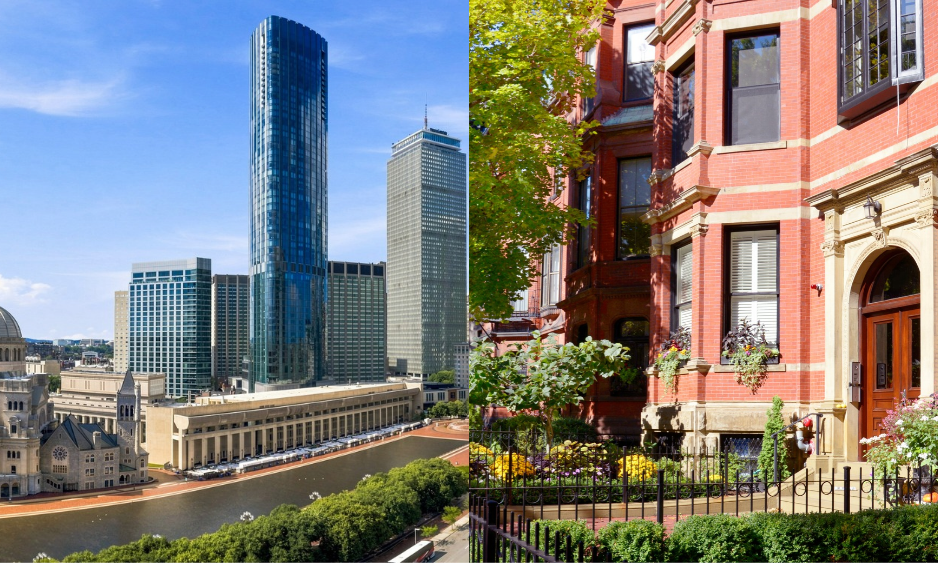
One of the most common questions we hear from Back Bay buyers sounds simple: should I buy a brownstone or a full-service condo?
Both can cost well over $1 million. Both can sit within a few blocks of the Public Garden, Newbury Street and the Esplanade. But living in them is very different. One gives you original architecture, a front stoop and a small group of neighbors who make decisions together. The other gives you a lobby, staff, an elevator and a building that handles most of the work for you.
Neither is the better choice in general. The right answer depends on how you want to live, how much you want to manage, and what you expect the home to do for you five or ten years from now. Here is how we help buyers think it through.
Key takeaways
- Most Back Bay purchases are condos. From January 1 through November 2, 2026, 246 condos closed in Back Bay at a median of $1,421,500, compared with 6 single-family homes at a median of $9.8 million (MLS PIN).
- Brownstone living usually means lower monthly fees but more shared decision-making, more stairs, and more exposure to big building projects.
- Full-service buildings bundle staff, parking options and amenities into higher monthly fees, and that service shows up in price per square foot.
- Back Bay Architectural Commission review applies to exterior work in the district, which matters most if you plan to change a roof deck, windows, doors or anything else on the outside.
| Small brownstone association | Full-service building | |
|---|---|---|
| Typical monthly fee | Median of about $640 a month, or about $0.56 per square foot, across 19 recent sales in 3 to 12 unit associations | Median of about $3,700 a month, or about $2.39 per square foot, across 24 recent sales, from about $1.35 per square foot at The Clarendon to about $3.16 at One Dalton |
| Big projects and special assessments | Fewer owners share a big bill. A roof, masonry repointing, a rear fire escape or a new heating system can lead to a special assessment if reserves are thin. | In a well-run building with healthy reserves, big projects are often planned years ahead and funded over time. |
| Stairs, packages and parking | Many have no elevator. Owners often coordinate deliveries, snow and vendors themselves. Many have no dedicated parking, though some units come with a deeded or rented space. | Elevators, and often a freight elevator. Staff receive deliveries. Garage parking, valet or deeded spaces are typical, with cost and availability varying by building and unit. |
| How decisions get made | A small group of owners, and many associations are self-managed. You may be the one collecting quotes. | A larger association with a board, a management company and more formal rules. |
| Exterior changes | Back Bay Architectural Commission approval is required before exterior work, including roof decks, windows and doors, and the association usually has to sign off too. | The exterior is the association's job. Most owners never deal with the Commission directly. |
Fees are calculated from monthly condo fees and square footage in MLS PIN closed sales from December 2025 through October 2026 (full-service: One Dalton, Mandarin Oriental, The Clarendon and Heritage on the Garden). Fees vary by building and unit, and what they cover varies too, so check the current budget for any home you are considering.
What "Brownstone" Means in Back Bay
When people say brownstone in Back Bay, they usually mean one of the 19th century rowhouses along Commonwealth Avenue, Marlborough Street, Beacon Street and the cross streets. Not all of them are actually brownstone. Many are brick or limestone, but the term has stuck for the whole housing style.
Very few of these buildings are still single-family homes. Most have been converted into condominiums, often with three to eight units. So "buying a brownstone" usually means one of three things:
- A unit in a small brownstone association. A floor-through, a duplex, a garden-level unit or a top-floor unit with a roof deck. This is the most common version.
- A whole brownstone. The entire building as a single-family home. These are rare and usually priced in the many millions.
- A multi-unit building. Some buyers purchase a whole building and live in part of it. This is less common and comes with its own set of landlord and lender questions.
What they share is character: high ceilings, tall windows, fireplaces, original millwork in many cases, and a street presence you cannot recreate in a newer building. What they also share is age. These are buildings that have been renovated many times over more than a century, and the quality of those renovations varies a lot.
Beacon Hill has its own version of this rowhouse style, with narrower streets and even fewer parking options. If you are looking on both sides of the Public Garden, our guide to moving to Beacon Hill covers how that neighborhood compares.
What a Full-Service Luxury Condo Looks Like
A full-service building is a different way of owning in the same neighborhood. In Back Bay and the blocks right around it, buyers often compare addresses such as the Four Seasons Private Residences at One Dalton, the Mandarin Oriental residences on Boylston Street, The Clarendon, Heritage on the Garden and the residences at Raffles Boston.
Services vary by building, but buyers are usually paying for some mix of:
- A staffed front desk, doorman or concierge
- Package handling and secure deliveries
- Garage parking, valet or deeded spaces
- Elevators, and often direct or private elevator access in higher-end units
- Fitness rooms, pools, lounges or other shared amenities
- In hotel-branded buildings, access to hotel services, sometimes for an added charge
- Professional management handling the building systems, exterior and common areas
The tradeoff is a larger association, more formal rules and higher monthly fees. You are one of many owners, and decisions run through a board and a management company rather than a conversation with two or three neighbors.
If you are comparing towers specifically, our post on One Dalton vs. Millennium Tower vs. EchelonSeaport goes deeper on how three of Boston's best-known buildings differ.
What the Back Bay Market Data Shows
We pulled MLS PIN data for Back Bay to show how these two paths compare in practice.
Condos are where most of the market is. In calendar year 2025, 301 Back Bay condos closed at a median sale price of $1.4 million and an average of $2,252,772. They averaged 73 days on market and 56 days to an accepted offer, and sold for about 97% of list price and 95% of original list price. From January 1 through November 2, 2026, 246 condos closed at a median of $1,421,500 and an average of $2,477,574, averaging 74 days on market and 57 days to offer, with sales at about 98% of list price and 96% of original list price. The average runs well above the median because a smaller number of very high-end sales pull it up.
Those condo numbers include both brownstone units and units in larger buildings. MLS PIN area reports do not separate the two, so treat the median as a neighborhood-wide reference point, not a brownstone price.
Whole brownstones are a very thin market. Only 7 single-family homes closed in Back Bay in 2025, at a median of $11.5 million, averaging 149 days on market and selling for about 89% of list price and 86% of original list price. From January 1 through November 2, 2026, 6 have closed at a median of $9.8 million, averaging 242 days on market, with sales landing around 91% of list price. With so few sales, one or two properties can move those numbers a lot. The bigger takeaway is that whole-house buyers should expect a slower, more negotiated process.
Service shows up in price per square foot. At One Dalton, 35 condo closings from January 1, 2024 through November 2, 2026 had a median of about $2,751 per square foot and an average of about $2,701, calculated from MLS PIN sold price per square foot for each sale. Part of that pricing reflects the newer construction, views and hotel brand, and part of it reflects the service model buyers are paying for.
Buyers have more choice right now. On November 2, 2026, there were 154 active Back Bay condo listings at a median list price of $1,772,500, averaging 93 days on market. At the 2026 sales pace, that is about 6.3 months of supply (calculated from MLS PIN data). For comparison, the earlier MLS PIN Back Bay Area Market Review showed 112 condos listed on October 7, 2022, about 3.8 months of supply. More inventory usually means more room to compare buildings, ask questions and negotiate, especially for homes that need work or have unusual layouts.
For a look at what a top-tier Back Bay budget buys compared with the suburbs, see What $5 Million Buys You: Back Bay vs. Weston.
Cost of Ownership: Where the Money Actually Goes
The purchase price is only part of the comparison. The monthly and long-term costs often matter more to how a home feels to own.
Condo fees in a full-service building
Full-service fees are higher because they pay for people. Staff wages, 24-hour coverage, elevator contracts, amenity upkeep, management, insurance on a large building and reserves all show up in the budget. Fees vary widely by building and by unit size, so the only reliable number is the one in that building's current budget.
The upside is predictability. In a well-run building with healthy reserves, big projects are often planned years ahead and funded over time.
Brownstone fees: smaller, but projects can be bigger
Monthly fees in a small brownstone association are often lower, sometimes much lower. But a three- or five-unit building has fewer owners to share a big bill. A roof replacement, masonry repointing, a new rear fire escape or a heating system replacement can lead to a special assessment if reserves are thin.
In MLS PIN sales from December 2025 through October 2026, full-service building fees in Back Bay ran a median of about $2.39 per square foot per month (from about $1.35 at The Clarendon to about $3.16 at One Dalton), while smaller brownstone associations ran closer to $0.56 per square foot.
Many small associations are self-managed. That can work well when owners are organized and get along. It can also mean you are the person collecting quotes or chasing a contractor.
Insurance, taxes and the condo paperwork
In both cases, the association carries a master insurance policy and you insure your own unit, belongings and improvements. Ask for the master policy so you know where the building's coverage stops and yours begins.
If the home will be your primary residence, look into Boston's Residential Exemption, which can reduce your property tax bill. Before closing on any Massachusetts condo, you will also receive a 6(d) certificate confirming whether the seller's common charges are paid up. It does not tell you whether the association is financially healthy, so it is not a replacement for reviewing the budget and reserves.
Historic District Rules: What the Back Bay Architectural Commission Reviews
Most of residential Back Bay sits in the Back Bay Architectural District, established in 1966. The Back Bay Architectural Commission reviews proposed exterior changes, and approval is required before exterior work begins.
In practice, that can include windows, doors, masonry, roof decks, rear facades, fences, lighting and parking areas. The Neighborhood Association of the Back Bay notes in its guide to building projects that even fairly small exterior changes are subject to review, though simple repairs that follow the guidelines can often be approved administratively without a public hearing. Interior work generally does not go to the Commission unless it affects the exterior, but it still needs city permits.
What this means for you:
- If you are buying a brownstone unit because you plan to add a roof deck or change windows, do not assume it will be approved. Ask whether similar work has been approved on the building or nearby.
- Ask the seller and association whether past exterior work was approved. Unapproved work can become the association's problem later.
- In a condo building, exterior changes are treated building-wide. One owner usually cannot change their own windows or balcony on their own.
Full-service buildings face design rules too, but the exterior is the association's job. Most owners never deal with the Commission directly.
Parking, Stairs and Everyday Logistics
Parking is one of the biggest practical differences. Many brownstones have no dedicated parking at all. Some come with a deeded or rented space behind the building or in a nearby garage, and those spaces carry real value. Boston offers free resident parking permits on posted streets. Resident-only areas have only a small number of short-term visitor spaces, so guests usually end up at a meter or in a garage. Full-service buildings typically offer garage parking, valet or deeded spaces, though the cost and availability vary by building and by unit.
Stairs and elevators matter more than people expect. Many brownstones have no elevator. A top-floor unit with a roof deck can mean four or five flights with groceries, luggage or furniture. Some renovated brownstones have added elevators, so ask rather than assume. Full-service buildings have elevators, and often freight elevators and loading procedures that make moving and deliveries easier.
Packages, snow and repairs are handled differently too. In a staffed building, someone receives deliveries and the building clears snow and handles common systems. In a brownstone, the association arranges those services, and owners often coordinate vendors themselves. Boston requires property owners to clear sidewalks after snow, so it is worth asking who actually does it.
Systems tend to be newer and centralized in larger buildings. Brownstones may have individual heating systems, older plumbing risers, window air conditioning or mini-splits, and electrical updates done at different times. None of that is unusual in Back Bay, but it is worth a careful inspection.
Which Lifestyle Fits Each Option
A brownstone tends to fit people who:
- Care most about architecture, ceiling height and historic detail
- Do not mind stairs and are comfortable without a front desk
- Want lower monthly fees and are prepared for occasional larger building costs
- Like having a voice in a small group of owners and being involved in decisions
- Want a garden-level patio, a private roof deck or the feel of living in a house
A full-service condo tends to fit people who:
- Travel often, split time between homes or want a lock-and-leave setup
- Want elevator access, staffed security and reliable package handling
- Need garage parking or valet as part of the home
- Prefer to pay a higher monthly fee in exchange for fewer surprises and less involvement
- Want amenities such as a fitness center, pool or concierge on site
Plenty of buyers want a little of both. Boutique elevator buildings and well-run larger brownstone associations can sit in the middle, with some services, an elevator and a smaller group of owners.
Resale: How Each Tends to Hold Up
Resale depends more on the specific home than on the category. A few patterns are worth knowing.
Brownstone units with strong light, good layouts, outdoor space, parking or an elevator tend to have the widest appeal. Units with steep stairs, low garden-level ceilings or awkward floor plans can take longer to sell, especially when buyers have plenty of other options.
In full-service buildings, resale is closely tied to the building's reputation, how well it is managed and how its fees compare with similar buildings. A building with a strong track record and healthy finances helps every unit in it. Large fee increases or major projects can slow resale for a while.
For single-family brownstones, the buyer pool is small. The 2026 data above shows long market times and real negotiation, so whole-house buyers should think about their likely hold period.
Questions to Ask Before You Buy Either One
For a brownstone unit:
- How many units are in the association, and is it professionally managed or self-managed?
- How much is in reserves, and when were the roof, masonry, rear egress and heating last addressed?
- Have there been special assessments in the last several years, or are any being discussed?
- Was past exterior work approved by the Back Bay Architectural Commission?
- Is the roof deck or outdoor space exclusive to the unit, and is that documented in the condo documents?
- Is parking deeded, rented or not available?
For a full-service building:
- What exactly does the monthly fee include, and what costs extra?
- How have fees changed over the last few years, and what is planned?
- How healthy are the reserves, and is there a recent reserve study?
- Are there any pending lawsuits, assessments or major capital projects?
- What are the rules for renovations, moving, pets and leasing?
- How is parking handled, and does it transfer with the unit?
In either case, read the master deed, bylaws, rules, budget and recent meeting minutes. Minutes are often where you learn what the building is really talking about.
Frequently Asked Questions
Are brownstone condos cheaper to own than full-service condos in Back Bay?
Monthly fees are often lower in a brownstone association, but total cost depends on the building. A small association with thin reserves can face a large special assessment, while a full-service building may spread big projects over time. Compare budgets, reserves and recent assessments, not just the monthly fee.
Can I add a roof deck to a Back Bay brownstone?
Possibly, but it is not guaranteed. Roof work in the Back Bay Architectural District is subject to Commission review, and the association usually has to approve it too. Building code, zoning and structural requirements also apply. If a roof deck is important to you, factor in approval risk before you buy.
Do Back Bay brownstones have parking?
Some do and many do not. Parking may be a deeded space behind the building, a rented space or a garage space bought separately. Ask exactly what transfers with the unit.
A Back Bay Detail We Love
Whichever direction you lean, take a long walk down the Commonwealth Avenue Mall before you decide. Designed in 1856 as the spine of the new neighborhood, it runs from the Public Garden through the heart of the brownstone blocks, and it is a good way to see how different buildings, stoops and cross streets actually feel day to day.
How We Help Buyers Decide
The Santana Team has helped more than 1,600 clients buy and sell throughout Greater Boston, including Back Bay brownstones and full-service condos. When buyers are weighing the two, we look beyond price per square foot. We review association documents, reserves, parking rights, renovation rules and true carrying costs, and we talk through how the home fits the way you actually spend your week.
If you are trying to decide between a Back Bay brownstone and a full-service building, connect with Hudson. He can help you compare specific buildings and think through the tradeoffs before you commit.
Market data: MLS PIN (Pinergy) Market Reports for Boston-Back Bay, pulled November 2, 2026, covering calendar year 2025 and January 1 through November 2, 2026. One Dalton figures reflect closed condo sales from January 1, 2024 through November 2, 2026. The 2022 inventory comparison is from the MLS PIN Back Bay Area Market Review as of October 7, 2026. Data through November 2, 2026, deemed reliable but not guaranteed. Market conditions, condo fees and local requirements can change over time, so confirm current information before making a decision.

Santana Team
| Santana Team | Keller Williams Boston Northwest
or another way