

Categories
Lifestyle & Community, Local Real Estate, Market UpdatesPublished September 29, 2026
Cambridge Just Took the First Step Toward Changing Its 2025 Multifamily Zoning Rules

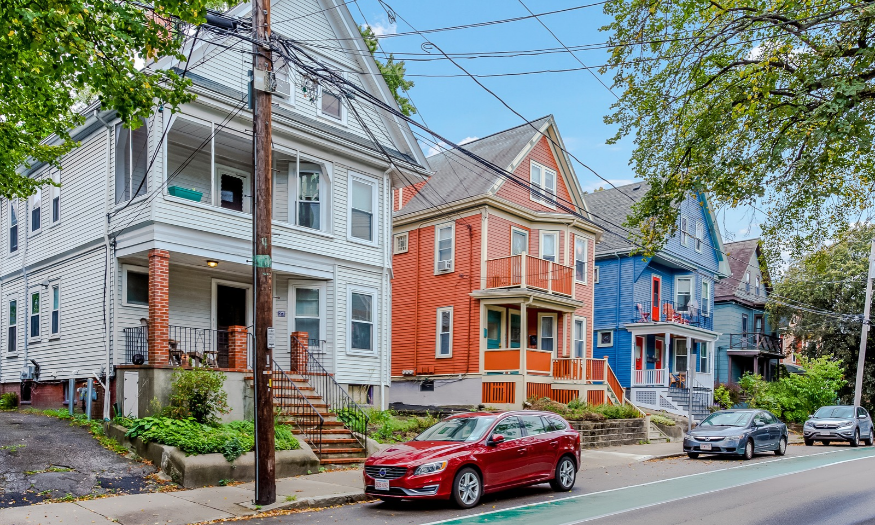
The City Council voted 9-0 on September 28 to move potential amendments forward. Here’s what could change, what residents are arguing about, and what remains the law today.
Cambridge made one of the biggest changes to its residential zoning in decades in February 2025, allowing multifamily housing throughout the city.
Now, a little more than a year and a half later, the City Council has taken the first formal step toward potentially changing parts of those rules.
At its September 28, 2026 meeting, the Council voted 9-0 to direct the City Manager, Community Development Department (CDD), and other city departments to prepare proposed zoning language based on recommendations developed during a September 16 joint committee meeting.
Important: Cambridge did not change its zoning on September 28. The 2025 Multifamily Housing Zoning Ordinance is still in effect today. The vote started a process that could eventually result in amendments.
Cambridge Multifamily Zoning: Where Things Stand Now
| Zoning Topic | Current Cambridge Zoning | What Is Being Considered |
|---|---|---|
| Citywide Multifamily Housing | Multifamily housing is allowed throughout Cambridge residential neighborhoods. | No repeal was adopted September 28. The current discussion is focused on possible adjustments to how development fits on individual sites. |
| Building Height | Residence C-1 generally allows up to 4 stories / 45 feet. Qualifying inclusionary projects on lots of at least 5,000 sq. ft. can reach 6 stories / 74 feet. | CDD will revisit prior development models, including a “3+3” concept. Some councillors have also questioned whether 5,000 sq. ft. is enough land for a 6-story building. |
| Setbacks & Open Space | The 2025 ordinance reduced residential setback requirements and applies open-space and Green Factor standards. | Larger setbacks and how usable open space is calculated are among the issues under discussion. |
| Inclusionary Housing | Projects creating 10+ units or more than 10,000 sq. ft. of residential space generally trigger Cambridge’s Inclusionary Housing requirements, which require 20% of residential floor area to be affordable. | Council members are considering how potential dimensional changes could affect both overall housing production and the creation of inclusionary units. |
| Legal Status | The February 2025 zoning remains in full effect. | No amendments have been enacted yet. Staff is now drafting possible changes for future review and votes. |
What Changed in Cambridge in 2025?
On February 10, 2025, the Cambridge City Council adopted zoning amendments intended to allow more multifamily housing throughout the city.
Before the change, some Cambridge neighborhoods had zoning that primarily allowed single-family or two-family homes. The new ordinance created much more consistent residential zoning across Cambridge.
Among the major changes:
- Multifamily housing became allowed in all Cambridge neighborhoods.
- Most residential neighborhoods were rezoned as Residence C-1.
- Residence C-1 generally allows residential buildings up to four stories, or 45 feet.
- On lots of at least 5,000 square feet, projects meeting inclusionary housing requirements can reach six stories, or 74 feet.
- Zoning eliminated minimum lot sizes, maximum unit counts, and residential floor-area-ratio limits that previously restricted development.
- Residential setback requirements were reduced.
- Remaining minimum parking requirements were removed.
The city described the goals as increasing housing production, spreading opportunities for multifamily housing more evenly throughout Cambridge, and encouraging permanently affordable housing through the Inclusionary Housing Program.
Importantly, zoning is only one layer of the development process. Projects may also have to meet building and fire codes, tree-protection requirements, stormwater and climate-resilience rules, historic requirements, Green Factor standards, and other city regulations.
Why Is Cambridge Already Looking at the Rules Again?
That was one of the major themes of the September 28 City Council meeting.
Residents spoke for hours about multifamily zoning, and there was no single consensus about what Cambridge should do next.
Some Residents Are Concerned About Redevelopment and Displacement
A number of speakers argued that the new development potential has made existing two- and three-family properties more attractive to builders.
They described properties being purchased, existing homes being demolished, and multiple new market-rate units being constructed in their place.
Their concerns included:
- tenants being displaced from existing rental housing;
- new units being priced far above what previous residents could afford;
- demolition of older two- and three-family homes;
- loss of mature trees and yards;
- stormwater and drainage impacts;
- neighborhood scale;
- construction impacts on neighboring homes; and
- additional pressure on limited street parking.
One particularly important issue raised repeatedly was the relationship between small redevelopment projects and Cambridge’s Inclusionary Housing Program.
Cambridge generally requires inclusionary housing when a residential project creates 10 or more units or more than 10,000 square feet of residential space.
That means a project with six, eight, or nine units is not automatically exempt simply because it contains fewer than 10 units. Its residential square footage also matters.
Still, smaller projects that remain below both thresholds can be entirely market-rate. That has become part of the debate when an existing two- or three-family property is replaced with several new homes but no permanently affordable unit is created.
Other Residents Say Cambridge Should Be Careful About Adding New Restrictions
Other speakers argued that the 2025 zoning changes were intended to address a housing shortage created over decades, and that Cambridge should not respond to early redevelopment activity by making housing substantially harder to build again.
They warned that each individual requirement may appear modest, but enough additional restrictions can make a project physically or financially infeasible.
Supporters of maintaining substantial development capacity also argued that new market-rate housing and permanently affordable housing are connected.
Cambridge’s six-story option, for example, is specifically tied to inclusionary housing. If dimensional restrictions make those larger projects more difficult to construct, opponents of tighter rules worry the city could ultimately get fewer affordable units as well.
That tension was also visible among the councillors themselves.
So What Changes Are Actually Being Considered?
The Council did not vote on finished zoning language. CDD now has to turn the recommendations and council direction into an actual proposal.
Several ideas came up during the discussion.
1. Larger Setbacks for Some Projects
CDD and residents have raised concerns about fitting multiple requirements into very small setback areas.
Setback space may need to accommodate things like:
- trees;
- stormwater management;
- fire access;
- building egress;
- Green Factor requirements; and
- usable outdoor space.
Some councillors support giving larger buildings more room around the property to accommodate those competing requirements.
Exactly what that would look like in the zoning ordinance has not yet been determined.
2. A Closer Look at What Counts as Open Space
Councillor Catherine Zusy argued during the meeting that green roofs and balconies should not necessarily count the same way as ground-level open space.
She also expressed concern that larger projects should have enough outdoor space for residents, including residents of inclusionary units.
Again, that was part of the council discussion, not a zoning change adopted September 28.
3. Reconsidering How Six-Story Buildings Fit on Smaller Lots
Current Residence C-1 zoning can allow a six-story building on a lot of at least 5,000 square feet when the development meets the applicable inclusionary requirements.
Councillor Zusy said she would prefer a larger lot threshold for six-story projects and questioned six-story construction on small lots and narrow streets.
She also acknowledged during the meeting that she did not believe there was currently enough support on the Council for all of those changes.
So homeowners should not interpret that discussion as a new minimum lot-size rule. There isn't one.
4. Revisiting the “3+3” Model
Councillor Patty Nolan asked CDD to revisit previous modeling of what was referred to during the meeting as the “3+3” approach.
The city studied several zoning scenarios before adopting the 2025 ordinance. Nolan asked staff to look again at whether an alternative model could produce the same amount, or potentially more, overall and affordable housing while reducing some of the development conflicts now being discussed.
CDD agreed to bring previous analysis back for consideration.
At this stage, “3+3” is something being reexamined, not the new Cambridge zoning standard.
One Major Constraint: Don't Substantially Reduce Housing Production
This may ultimately be one of the most important parts of the September 28 discussion.
Several councillors made clear that potential amendments should be evaluated against their effect on housing production.
Councillor Patty Nolan specifically described the goal as finding adjustments that improve the ordinance without decreasing the amount of housing, including affordable housing, that Cambridge can expect to produce.
CDD said it would bring back previous development projections and modeling to help evaluate the options.
That could make the next stage considerably more complicated than simply increasing setbacks or changing a height limit.
A restriction in one place could potentially be paired with additional housing capacity somewhere else.
Even the Councillors Don't Agree Yet on How Far Changes Should Go
The 9-0 vote should not be interpreted as nine councillors agreeing on a final zoning plan.
They don't.
Some councillors appear interested in relatively targeted adjustments. Others raised broader concerns about six-story construction on smaller lots and the cumulative effect of redevelopment on existing neighborhoods.
There are also concerns in the opposite direction.
Council members discussed current construction economics, including financing and development costs, and questioned whether adding restrictions could leave Cambridge with plenty of theoretical zoning capacity but relatively few projects that are financially realistic to build.
Those disagreements will matter once CDD returns with actual zoning language.
What Did the City Council Vote On September 28?
The final vote was 9-0.
The Council ordered the City Manager to work with CDD and relevant city departments to prepare zoning language based on recommendations from the September 16 joint meeting.
That was a vote to prepare potential amendments.
It was not a vote adopting those amendments.
CDD told the Council it expected to return with proposed language within approximately six to eight weeks.
Councillor Marc McGovern then outlined what happens next.
The proposal is expected to return to the Ordinance Committee, where there will likely be additional meetings, including opportunities for public comment and council deliberation.
After that, any recommended zoning amendments would return to the full City Council and still have to complete Cambridge’s formal zoning-adoption process.
In other words: there are several steps left.
What Should Cambridge Homeowners, Buyers, and Sellers Do Right Now?
For the moment, the most important takeaway is simple:
Do not assume Cambridge's zoning changed on September 28. It didn't. The February 2025 multifamily zoning remains the current law.
That matters if you're:
- evaluating the development potential of a property;
- considering selling a two- or three-family home;
- buying a property based partly on what could be built on the lot;
- considering a renovation or redevelopment;
- looking at a property next to a potential redevelopment site; or
- comparing land values and redevelopment opportunities.
It is also important not to assume that the maximum zoning envelope is automatically what can be built.
The specific lot, existing structures, tree requirements, stormwater conditions, building and fire codes, historic status, inclusionary requirements, and basic construction economics can all affect what is actually feasible.
And now, the zoning itself could be adjusted again.
Want to Watch the September 28 Discussion Yourself?
For a topic this politically and economically complicated, we think it is useful to go directly to the meeting rather than rely only on someone else's summary, including ours.
Cambridge City Council Meeting, September 28, 2026
Watch the Full City Council Meeting
Multifamily zoning comes up repeatedly during public comment throughout the meeting.
If you want to skip directly to the City Council's discussion, it begins at approximately 4:58:42.
The final roll-call vote begins around 5:13:34, with all nine councillors voting in favor of moving the drafting process forward.
The Bottom Line
Cambridge did not repeal or rewrite its 2025 multifamily zoning rules on September 28.
But something important did happen.
For the first time since adopting the citywide changes, the full City Council unanimously agreed to move potential amendments into the drafting stage.
Now CDD has to answer the harder question: can Cambridge address concerns about setbacks, open space, redevelopment, and neighborhood impacts without significantly reducing the housing, including affordable housing, that the 2025 ordinance was intended to create?
We should have a much clearer answer once the actual proposed zoning language comes back for public review.
Zoning rules are property-specific and can change. Buyers, sellers, and property owners should confirm current requirements with the City of Cambridge and appropriate legal or zoning professionals before making decisions based on development potential.

Santana Team
| Santana Team | Keller Williams Boston Northwest
or another way