

Categories
Home Buying Tips, Homeowner Tips, Home Selling TipsPublished September 14, 2026
Knob-and-Tube Wiring in Greater Boston: What Buyers & Sellers Should Know

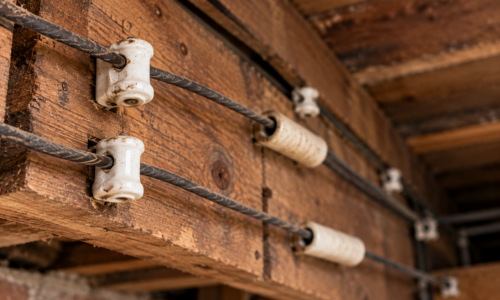
A neighbor recently shared that they didn’t realize their home still had knob-and-tube wiring until they were selling it and the issue came up during the buyer’s home inspection.
That got me thinking about how many Greater Boston homeowners and buyers could run into the same surprise. You can live in an older home for years, make updates, and never realize that some of the original electrical wiring may still be active behind the walls. Buyers may not know it is there either until an inspection takes a closer look.
Knob-and-tube wiring is still found in older homes throughout Somerville, Cambridge, Medford, Arlington, Boston, and other nearby communities. And while finding it does not automatically mean there is a major problem, it can raise important questions about electrical safety, insurance, insulation, repairs, and how to move forward with a home purchase or sale.
Here’s what Greater Boston homeowners, sellers, and buyers should know if knob-and-tube wiring comes up.
What Is Knob-and-Tube Wiring?
Knob-and-tube, often shortened to K&T, is an older type of electrical wiring commonly installed in homes from the late 1800s through the early 1900s. Mass Save notes that it was commonly used in homes built between the 1880s and 1940s.
Instead of modern electrical cables, knob-and-tube systems use individual insulated wires supported by porcelain knobs and protected by porcelain tubes where the wires pass through wood framing.
The wiring was designed differently from modern electrical systems. Among other differences, traditional knob-and-tube systems do not include the equipment grounding conductor we expect in newer wiring.
The bigger question, though, usually isn’t simply:
Does this house have knob-and-tube?
It’s:
Is any of it still active, what condition is it in, and has it been altered over the years?
That distinction matters.
Why You Might Not Know Your Home Has It
One of the most interesting parts of my neighbor’s story was that they had lived in the home without realizing knob-and-tube wiring was still there.
That’s completely plausible in an older Greater Boston home.
Electrical systems are often updated over time rather than all at once. A home may have a newer electrical panel, modern outlets, renovated rooms, and newer wiring in parts of the house while older wiring remains elsewhere.
And because much of a home’s wiring runs behind walls and ceilings, homeowners aren’t exactly conducting routine archaeological expeditions into their plaster.
You may discover older wiring during:
- A buyer’s home inspection
- A pre-listing home inspection
- An electrical repair or upgrade
- A renovation
- An insulation or weatherization project
- An insurance review
Even a home inspection has limitations. Massachusetts home inspections generally cover readily accessible and observable systems and components. An inspector is not opening every wall to trace the home’s entire electrical system.
That means an inspector may identify visible knob-and-tube wiring or other signs that warrant further evaluation without being able to tell you exactly how much remains active throughout the house.
That’s where a licensed electrician may need to take over.
Is Knob-and-Tube Wiring Dangerous?
This is where internet advice tends to leap directly from “old wiring” to “your house will burst into flames by Thursday.”
The answer is more nuanced.
The fact that knob-and-tube wiring exists does not, by itself, tell you the condition of the entire electrical system.
But there are legitimate concerns with older electrical systems.
The U.S. Consumer Product Safety Commission has documented fire problems involving knob-and-tube systems where wiring had been overloaded, improperly extended, over-fused, damaged, or surrounded by thermal insulation.
Remember that these systems were installed when the electrical demands of a household looked very different. Modern homes routinely power computers, televisions, air conditioners, hair dryers, kitchen appliances, chargers, and countless other devices that did not exist when the wiring was installed.
Decades of renovations also matter. An electrician evaluating an older home isn’t just looking at the original wiring. They’re looking at what happened to it during the following 80, 90, or 100-plus years.
Knob-and-Tube and Insulation Can Be a Particular Concern
This is one homeowners often don’t realize until they try to make their home more energy efficient.
Traditional knob-and-tube wiring was designed to dissipate heat into the surrounding air. Covering active wiring with thermal insulation can create concerns.
Mass Save identifies knob-and-tube wiring as a potential barrier to insulation and weatherization work.
So you might schedule a Home Energy Assessment hoping to make your drafty Greater Boston home more comfortable and discover that electrical work needs to happen before certain insulation improvements can move forward.
Depending on the property and the Mass Save program you qualify for, financial assistance may be available to help address pre-weatherization barriers such as knob-and-tube wiring.
Program eligibility and incentive amounts change over time, so homeowners should confirm current Mass Save requirements before planning around a specific rebate, grant, or financing option.
What Happens If Knob-and-Tube Comes Up During a Home Inspection?
For a buyer, the first step is usually not to panic or immediately decide the house is off the table.
It’s to gather more information.
A home inspector may recommend that a licensed electrician evaluate the electrical system to determine things such as:
- Whether the knob-and-tube wiring is still energized
- Approximately how much of the home it serves
- Its visible condition
- Whether modifications or extensions appear to have been made
- Whether grounding or electrical-capacity issues exist elsewhere
- What repairs or replacement may be appropriate
From there, the buyer can better understand the scope of the issue and make decisions based on the actual house rather than a generic rule found online.
This is also one reason Massachusetts’ current home-inspection rules matter. For most covered residential sales occurring after October 15, 2025, sellers and their agents cannot condition acceptance of an offer on the buyer agreeing to waive or improperly limit their right to a home inspection.
You can learn more about current Massachusetts home-inspection requirements through the Commonwealth of Massachusetts.
An inspection can uncover exactly the kind of issue a buyer simply would not know about from touring a home.
Knob-and-Tube Action Plan at a Glance
| If You Are... | Your Immediate Goal | A Good Next Step |
|---|---|---|
| A current homeowner | Understand whether the wiring is active and whether it affects future improvements | Have a licensed electrician evaluate visible or suspected knob-and-tube, particularly before insulation or renovation work |
| A home buyer | Understand the scope, possible repair cost, and insurance implications | Use your inspection period to gather additional electrical information and talk with your insurance professional early |
| A home seller | Understand the issue before it creates unnecessary uncertainty or delays | If knob-and-tube is identified, determine whether it is active and discuss repair, documentation, and sale strategy with the appropriate professionals |
What If You’re the Homeowner or Seller?
If you’re the homeowner who learns about knob-and-tube because your buyer’s inspector found it, your next steps will depend heavily on what was actually discovered.
Visible remnants of old wiring are different from an electrician confirming that a significant portion of the house is still actively served by it.
You may decide to have your own licensed electrician evaluate the system so you understand the scope rather than trying to negotiate based on incomplete information.
Depending on the findings, a seller might:
- Complete electrical work before closing
- Negotiate around the issue with the buyer
- Provide information or estimates so the buyer can address it after closing
- Decide not to make changes, depending on the terms of the sale and the buyer’s plans
There isn’t one correct solution for every property.
And if you’re considering selling an older home but haven’t listed yet, this is also an argument for thinking carefully about whether a pre-listing inspection or targeted electrical evaluation makes sense.
That doesn’t mean every homeowner should start hunting for problems before putting their house on the market. Learning about an issue can create new decisions and disclosure considerations of its own.
But when we advise a seller, we’d rather talk through those tradeoffs before the house is under agreement than discover that everyone involved needs an electrical education during a short inspection period.
If you are thinking about selling and want to understand how an inspection issue could affect your strategy, you can connect with the Santana Team before you list.
Can Knob-and-Tube Wiring Affect Homeowners Insurance?
Potentially.
Insurance underwriting requirements vary by company, property, and the condition of the electrical system. Some insurers may have restrictions, require additional information, or want electrical work completed before they will provide coverage.
That is why buyers shouldn’t assume either extreme:
“No insurance company will insure this house.”
or
“The wiring doesn’t matter because it’s been there for 100 years.”
If knob-and-tube is identified during your purchase, talk with your insurance professional early. Don’t wait until closing is around the corner to discover that your intended carrier needs documentation, an electrical evaluation, repairs, or a different approach.
For buyers, this is just as important as understanding the estimated repair cost. A manageable electrical project can become a much bigger closing problem if insurance questions are left until the last minute.
Should You Replace Knob-and-Tube Wiring?
That’s a question for a licensed electrician who has evaluated the actual home.
The cost and scope can vary significantly depending on how much active wiring remains, where it is located, how accessible it is, and what other electrical upgrades may be needed.
Replacing wiring in an unfinished basement or accessible attic is a very different project from rewiring circuits running through finished plaster walls across multiple floors.
This is another reason we don’t recommend relying on a generic online estimate when you’re making decisions about a particular property.
First find out what you actually have.
Then price the actual work.
Buying an Older Greater Boston Home? Put the Issue in Context
Knob-and-tube wiring is one of many things that can surface when buying an older home.
You may also encounter older plumbing, aging heating systems, previous additions, electrical panels installed during different eras, layers of renovation, or building materials that aren’t commonly used today.
That doesn’t automatically make an older home a bad purchase.
It means understanding the property matters.
A century-old Somerville home should not be evaluated as though it rolled off a production line last year. Part of buying an older home is identifying what has already been updated, what hasn’t, and which projects deserve attention now versus later.
The goal isn’t to find a flawless house.
It’s to know what you’re buying.
What We Recommend When Knob-and-Tube Comes Up
Whether you’re the buyer or the homeowner, resist the temptation to make a major decision based on the words “knob-and-tube” alone.
Get enough information to understand the specific situation.
For a buyer, that may mean using the inspection period to have the electrical system evaluated and understanding possible insurance implications before moving forward.
For a homeowner, it may mean determining whether old wiring is actually active before deciding whether a larger project is necessary.
For a seller, it may mean working with your agent, electrician, and other appropriate professionals to understand your options if the issue comes up during the sale.
After helping more than 1,600 clients across Greater Boston, we’ve learned that older homes rarely fit neatly into a checklist. Two houses built in the same decade can have completely different histories depending on how previous owners maintained, renovated, and updated them.
That’s why our job isn’t to tell someone that knob-and-tube wiring is automatically fine or automatically a dealbreaker.
It’s to help our clients ask the right questions, bring in the right professionals, and understand the information before deciding what comes next.
If you’re buying or selling an older home in Greater Boston and you’re trying to figure out how an inspection issue could affect your plans, our full team is available to help you work through the process.
Electrical systems and individual properties vary. This article is intended as general real estate information and is not a substitute for an evaluation by a licensed electrician, home inspector, insurance professional, or other qualified professional. Massachusetts laws, regulations, insurance requirements, and incentive programs can also change over time.

Santana Team
| Santana Team | Keller Williams Boston Northwest
or another way