

Categories
Local GuidesPublished September 11, 2026
Massachusetts ADU Guide: What Greater Boston Homeowners Should Know

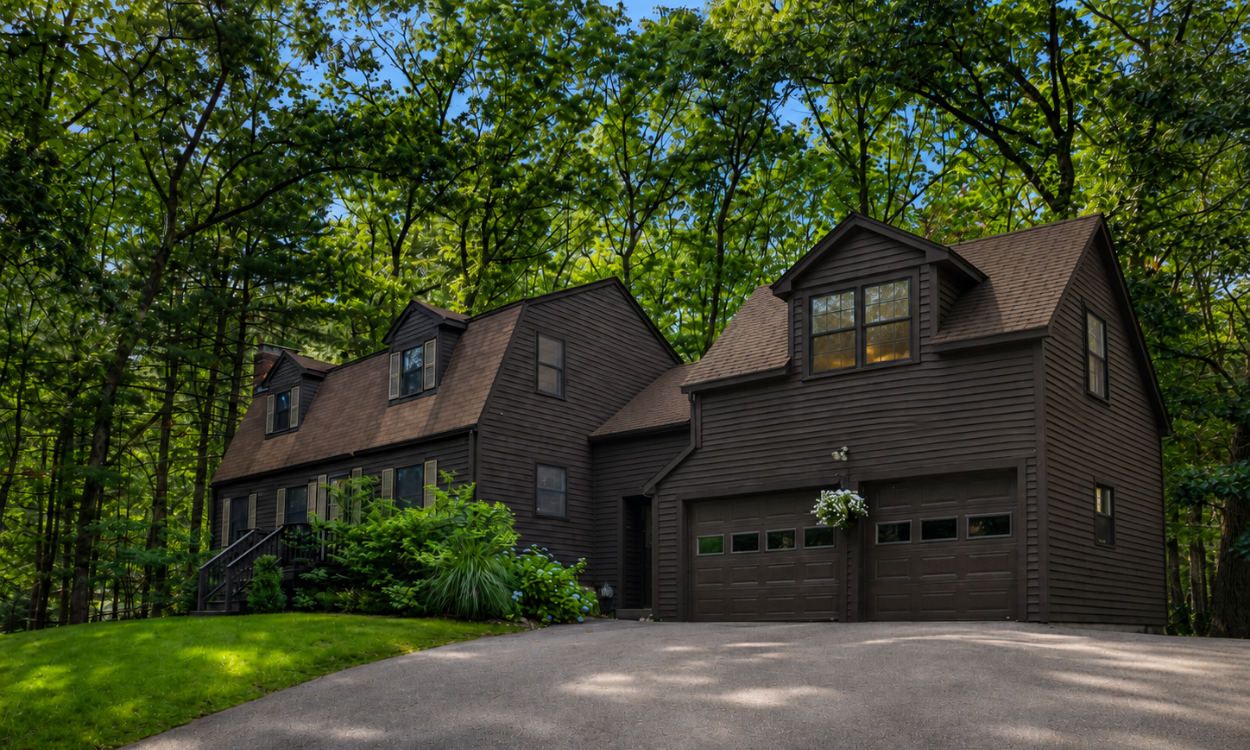
If you own a home in Massachusetts and have ever looked at your basement, garage, attic, or backyard and wondered whether it could become another living space, the answer may be different today than it was just a few years ago.
Massachusetts changed its zoning law to make it significantly easier to create accessory dwelling units, or ADUs. Since February 2, 2025, one qualifying ADU has been allowed by right in zoning districts where single-family homes are permitted across most of Massachusetts.
And homeowners are already using the new rules. As of August 2026, Massachusetts municipalities had approved 2,084 ADUs since the beginning of 2025, including 854 during the first half of 2026, according to the Massachusetts Executive Office of Housing and Livable Communities.
Massachusetts ADU Fast Facts
- Maximum size: Generally 900 square feet or 50% of the gross floor area of the principal dwelling, whichever is smaller.
- Owner occupancy: A municipality cannot require the owner to live in either the principal dwelling or the protected ADU.
- Parking: Zero additional spaces can be required if the property is within 0.5 miles of a qualifying transit station. Outside that radius, no more than one additional space can be required.
Those rules create a lot more opportunity for Massachusetts homeowners, but "by right" does not mean "build anything you want."
Local permitting, setbacks, building codes, utilities, site conditions, short-term rental rules, and construction costs can still determine whether an ADU actually works on a particular property.
What Is an ADU?
An accessory dwelling unit is a second, independent dwelling unit located on the same lot as a principal dwelling. It can be located inside the main home, attached to it, or in a separate structure.
Under Massachusetts ADU rules, an ADU includes its own sleeping, cooking, and bathroom facilities and must have a separate entrance. That entrance can lead directly outside or through a shared hallway or corridor that meets applicable building-code requirements.
An ADU can generally take three forms:
- Internal ADU: Created within the existing home, such as a basement conversion
- Attached ADU: Added onto the principal dwelling
- Detached ADU: Located in a separate structure, such as a small cottage or converted detached garage
What makes the space an ADU is not whether it is physically separate from the main house. It is whether it functions as its own independent dwelling unit.
This is also where the common term "in-law suite" can cause confusion. An in-law suite is generally an informal real estate term and does not necessarily describe a separate legal dwelling unit. A basement with a bedroom, bathroom, and living area may simply be additional space within the main home. If the space has the complete independent facilities required for an ADU and is legally permitted that way, it may instead qualify as an ADU.
Detached ADUs are one reason Greater Boston homeowners may also hear terms like backyard cottage.
They overlap, but they are not necessarily the same thing.
Somerville, for example, already has its own backyard cottage building type. If you want to see what that can actually look like in the local real estate market, read our guide to backyard cottages in Somerville.
We'll also break down the terminology separately in ADU vs. Backyard Cottage: What's the Difference in Somerville?
How Large Can an ADU Be in Massachusetts?
Under the statewide protected-use rules, an ADU is generally limited to:
900 square feet or half the gross floor area of the principal dwelling, whichever is smaller.
For example, if the principal dwelling contains 1,400 square feet of qualifying gross floor area, the protected ADU could generally be up to 700 square feet.
If the principal dwelling contains 2,400 square feet, the state threshold would generally cap the protected ADU at 900 square feet.
There is an important wrinkle: Massachusetts municipalities are allowed to adopt rules that are more permissive than the statewide standards. So the state rule provides an important baseline, but it may not represent the maximum allowed under every local zoning ordinance.
Gross floor area is also defined specifically under the state regulations. Basements, for example, can be included in the calculation, while certain spaces such as garages, crawl spaces, attics, and enclosed porches may not be.
That means the square footage shown in a real estate listing or municipal assessment should not automatically be treated as the number used for ADU calculations.
Does the Owner Have to Live on the Property?
No.
Under the Massachusetts protected-use ADU law, a municipality cannot require the owner to occupy either the principal dwelling or the ADU.
A municipality also cannot require the ADU occupant to be related to the property owner.
That makes the current ADU framework much broader than the traditional idea of an "in-law apartment."
Depending on the property and local requirements, an ADU might be used for a relative, caregiver, long-term tenant, or another occupant without a family relationship to the homeowner.
Can an ADU Be Rented?
Yes. Qualifying ADUs can generally be rented on a long-term basis, and municipalities cannot impose an owner-occupancy requirement simply because the unit is rented.
Short-term rentals are different.
Massachusetts specifically allows cities and towns to restrict or prohibit the use of ADUs as short-term rentals. Someone considering an ADU primarily for Airbnb or another short-term rental strategy should verify the municipality's current rules before assuming that use will be allowed.
What's the Difference Between an ADU and a Two-Family Home?
This is one of the easiest parts of the new law to misunderstand.
An ADU is a second independent dwelling unit, but Massachusetts zoning treats one qualifying ADU as accessory to the principal dwelling.
That means a property in a single-family residential zoning district can add a protected ADU without necessarily having to qualify as a conventional two-family property under local zoning.
For example, imagine a single-family home where the basement is legally converted into an ADU with its own kitchen, bathroom, sleeping area, and qualifying entrance. There are now two independent dwelling units in the building, but for zoning purposes one remains the principal dwelling and the other is the accessory dwelling unit.
A traditional two-family property, by contrast, is generally organized as two principal dwelling units rather than one principal dwelling plus an accessory unit.
The distinction can affect zoning, permitting, building-code requirements, financing, assessment, and how the property is represented when it is eventually sold. Homeowners should verify the specific treatment of their property with the municipality and appropriate professionals rather than assuming that creating an ADU automatically converts the property into a conventional multifamily use.
Do You Need to Own a Single-Family Home to Build an ADU?
Not necessarily.
This is another easily misunderstood part of the law.
The statewide protection is tied to whether the property is located in a zoning district where single-family residential use is allowed, not simply whether the existing building is a single-family home.
That means a property containing a duplex, triple-decker, another multifamily building, or even certain mixed-use buildings may potentially qualify for a protected-use ADU if it is located in an eligible zoning district.
Likewise, adding a qualifying ADU to a single-family property does not automatically mean the property must be rezoned or treated as a conventional two-family use. The state framework specifically allows one dwelling to remain the principal dwelling while the additional unit is treated as accessory.
Only one ADU per qualifying lot receives the state's by-right protection. Municipalities may choose to allow additional ADUs under their local zoning rules.
For Greater Boston owners, where two- and three-family homes are hardly an exotic species, this distinction can be particularly important.
What Does "By Right" Actually Mean?
"By right" does not mean no permit, no rules, and no one at City Hall will ever ask you for another piece of paper.
It means a qualifying protected-use ADU cannot be prohibited or required to obtain a special permit or another discretionary zoning approval simply because it is an ADU.
Cities and towns can still impose reasonable requirements involving issues such as:
- Site plan review
- Building and fire codes
- Dimensional setbacks
- Building height and bulk
- Septic and Title 5 requirements where applicable
- Utility connections
- Short-term rental restrictions
- Other generally applicable local permitting requirements
Municipalities can also be more permissive than the state framework.
Before planning a project, homeowners should therefore check both the Massachusetts ADU rules and the current requirements in their specific city or town. The state's official ADU FAQ is a useful starting point.
How Do the Massachusetts ADU Parking Rules Work?
Parking is another major part of the statewide law.
For a protected-use ADU located within 0.5 miles of a qualifying transit station, a municipality cannot require any additional parking for the ADU.
Qualifying transit can include a:
- Commuter rail station
- Subway station
- Ferry terminal
- Bus station
In Greater Boston, that can make the rule especially relevant for properties near the MBTA Red Line, Green Line Extension, commuter rail stations, and other qualifying transit locations.
For example, portions of Cambridge and Somerville are served by Red Line and Green Line stations, so the half-mile parking provision may affect ADU feasibility for properties located near those stations.
Outside the half-mile radius, a municipality can require no more than one additional parking space for a protected-use ADU.
The state's updated guidance also clarifies that a bus station needs to be a regular, specific pick-up and drop-off location. Not every flag stop along a bus route automatically qualifies.
Does the Massachusetts ADU Law Apply in Boston?
No.
The statewide ADU law applies to 350 of Massachusetts' 351 cities and towns.
Boston is the exception.
The law was adopted under Massachusetts General Laws Chapter 40A, and Boston is not governed by Chapter 40A.
Boston property owners therefore cannot rely on the statewide protected-use ADU rules discussed in this guide. ADU possibilities within Boston need to be evaluated under Boston's own zoning and permitting framework.
So when you see the new rules described casually as a "statewide ADU law," mentally add an asterisk the size of the Prudential Tower.
Why Are ADUs Getting So Much Attention?
ADUs can create housing without requiring an entirely new subdivision or large-scale apartment development.
For homeowners, they can also create flexibility.
Depending on the property and the owner's goals, an ADU might provide:
- A separate long-term rental unit
- Additional housing for relatives or caregivers
- Better use of an existing basement, garage, or other space
- An additional home without subdividing the property
- More flexibility for how the property can be used over time
The state is clearly seeing significant homeowner interest.
During 2025 and the first half of 2026, municipalities reported 2,824 ADU applications and 2,084 approvals. About 70% of Massachusetts communities had approved at least one ADU by August 2026.
The state has also begun rolling out programs intended to help homeowners evaluate and finance ADUs, including professional feasibility-study resources and financing programs for eligible homeowners.
Does Building an ADU Increase Your Property Value?
Potentially, but there is no automatic formula.
A legal additional dwelling unit can create value, but the amount depends heavily on the property and local market.
We would look at factors such as:
- Location
- ADU type and layout
- Privacy between the two units
- Construction quality
- Parking and access
- Potential rental income
- Construction cost
- How the finished property compares with nearby sales
- How future buyers are likely to use the additional unit
That last part matters.
Something can be legal to build and still make very little economic sense.
Before a homeowner spends a substantial amount of money creating an ADU, we think it is worth asking both questions:
What can we legally build?
What is the finished property likely to be worth?
For homeowners evaluating an ADU partly as an investment, our Greater Boston real estate investment team can help analyze the existing property, comparable sales, potential finished value, and local buyer demand before a major construction decision is made.
What Should Greater Boston Homeowners Do First?
1. Confirm the Property's Zoning
Start with the zoning district.
Determine whether single-family residential use is permitted in that district and whether the property falls under the statewide protected-use ADU framework.
For Boston properties, use Boston's local zoning rules instead.
2. Evaluate the Existing Property
Lot configuration matters.
So do setbacks, the existing building, access, utilities, topography, trees, septic where applicable, and the location of other structures.
An internal basement ADU may present completely different opportunities and challenges from a detached backyard unit.
3. Decide What You're Actually Trying to Create
Do you want:
- A long-term rental?
- A separate living area?
- A detached cottage?
- A conversion inside the existing home?
- More flexibility for the property over time?
Knowing the goal makes it much easier to determine which professionals and approvals you'll actually need.
4. Check With the Municipality and Qualified Professionals
Permitting remains local even though state law establishes important protections.
Massachusetts recommends contacting the municipality's building department for current local procedures and speaking with appropriate building, design, legal, engineering, or other professionals depending on the property.
The state also launched an ADU Incentive Program in July 2026 that connects homeowners with professional feasibility-study providers who can evaluate items such as site conditions, local permitting, utilities, preliminary design options, and high-level costs.
5. Run the Real Estate Numbers Before Committing
Before moving from feasibility to construction, compare estimated costs with the potential benefit.
Consider financing, rental income if applicable, taxes, insurance, maintenance, and eventual resale.
Our team regularly evaluates Greater Boston properties from this perspective for homeowners, investors, and builders: not simply what can be built, but whether the proposed finished property fits the local market.
A Greater Boston Example: Somerville Backyard Cottages
Somerville is an especially interesting place to watch this conversation because small-scale detached housing was already part of the city's zoning vocabulary before the new Massachusetts ADU law took effect.
The city uses the term backyard cottage for a specific detached accessory building type.
That does not make every ADU a backyard cottage, or every backyard cottage an ADU, but a detached backyard cottage containing an independent dwelling can potentially fit both descriptions.
We've also seen this housing type in the actual Somerville market, not just on a zoning diagram.
Our guide, What Are Backyard Cottages? Somerville's Small-Scale Housing Trend Explained, looks at real examples at 16 Hamlet Street and 192 Washington Street UR and explains what buyers should consider when evaluating this less-common housing type.
We'll dig further into the terminology in our upcoming guide, ADU vs. Backyard Cottage: What's the Difference in Somerville?
A Local Transit Lens
Somerville also illustrates why the statewide parking rule can matter so much in Greater Boston.
The MBTA Green Line Extension and Somerville Community Path run through a dense city where many properties have limited lot area and parking. For a qualifying property near transit, removing an additional ADU parking requirement can eliminate one potential obstacle to creating another home.
It is a small provision in the law with very practical consequences in communities where finding space for another parking spot can sometimes feel more ambitious than finding space for the actual house.
ADUs Create Opportunity, but Every Property Is Different
The Massachusetts ADU law created a meaningful new opportunity for property owners.
But the smartest first question is not simply:
"Can I build an ADU?"
It is:
"What makes sense for this property?"
The Santana Team has worked with buyers, sellers, homeowners, builders, and real estate investors across Greater Boston since 2014, including 56 developers and investors on 111 projects representing 385 completed units and more than $483 million in sales across 25 Massachusetts towns.
That experience gives us a useful perspective when zoning, construction potential, finished value, and resale all have to be considered together.
We're also a full team, so clients have access to local market knowledge and investment analysis throughout the process while working with the appropriate legal, architectural, engineering, permitting, construction, tax, and financing professionals for their project.
Considering an ADU or a Property With Development Potential?
Before making a major investment, understand both what the property may allow and what the finished real estate could be worth.
Talk With Hudson About Your Property
You can also explore how our Greater Boston real estate investment team works with investors and builders.
Market conditions, zoning rules, municipal procedures, available programs, and ADU regulations change over time. This article reflects information available as of August 2026 and is intended for general informational purposes only. It is not legal, architectural, engineering, tax, financing, zoning, or permitting advice. Always confirm requirements for a specific property with the applicable municipality and qualified professionals.

Santana Team
| Santana Team | Keller Williams Boston Northwest
or another way