

Categories
Homeowner Tips, Local Real EstatePublished October 13, 2026
Converting a Multifamily to Condos in Somerville: Removal Permits & the Process

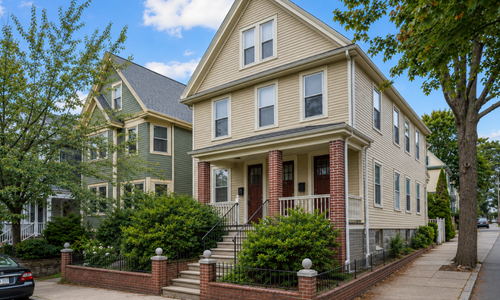
Owning a two-family or three-family in Somerville gives you more than one possible exit strategy.
You could keep the property as a rental. You could eventually sell the entire building as a multifamily. Or, depending on the property and its occupancy history, you may be able to convert it into individual condominiums and sell the units separately.
That last option can create significant flexibility, but in Somerville, it requires more planning than many property owners expect.
The most important thing to understand: A Somerville condo conversion starts with the property's occupancy history, not the renovation.
Before deciding how to remodel the kitchens, divide the yard, or price the future condos, you need to understand whether the property can be converted, which City permit applies, and whether a waiting period or tenant protections affect your timeline.
Can You Convert a Multifamily to Condos in Somerville?
Usually, yes, but Somerville has a local Condominium Conversion Ordinance that regulates the process.
Property owners converting residential units into condominiums generally need approval from the City's Condominium Review Board. The Board administers the ordinance, reviews applications, verifies that applicable tenant protections have been satisfied, and votes on conversion permits at monthly meetings.
Review the City of Somerville's condominium conversion process.
This makes Somerville different from municipalities where establishing a condominium can be primarily a matter of preparing plans and legal documents.
Here, the property's current and prior use matters first.
Is It a "Removal Permit" or a "Condo Conversion Permit"?
You may hear attorneys, agents, builders, and longtime Somerville property owners refer to a removal permit.
That terminology comes from the fact that the ordinance regulates the removal of rental units from the rental housing market. The City's current materials generally refer to Condominium Conversion Permits, including preliminary rental, preliminary non-rental, and final conversion permits.
So if someone tells you that you need to "get the removal permit," they are talking about this municipal condo-conversion process, not an unrelated building permit.
Changing the vocabulary, unfortunately, does not make the paperwork disappear.
Your Occupancy History Determines the First Step
Somerville issues permits by unit, not simply by building.
That means a two-family property could potentially have different requirements for Unit 1 and Unit 2 depending on how each unit was occupied.
Somerville Condo Conversion Timing at a Glance
| Unit's Recent Use | General Timing Consideration | Typical Permit Path |
|---|---|---|
| Owner-occupied or other qualifying non-rental use | No waiting period if requirements are satisfied | Preliminary Non-Rental Conversion Permit |
| Vacant, but most recently used as a rental | Generally 2 years | Preliminary Rental Permit → Final Conversion Permit |
| Currently rented, standard tenant | Generally 1-year tenant notice period | Preliminary Rental Permit → Final Conversion Permit |
| Currently rented, tenant with enhanced protections | Generally 5-year tenant notice period, with additional protections possible | Preliminary Rental Permit → Final Conversion Permit |
The City currently states that preliminary non-rental permits have no waiting period, most currently tenanted rental units have a one-year waiting period, and vacant units whose last use was rental generally have a two-year waiting period.
For certain elderly, disabled, or low-to-moderate-income tenants, the right to continued occupancy generally extends to five years. Additional housing-search protections can apply depending on the situation.
The details matter, which is why an owner should confirm the requirements for the actual property rather than treating this table as a substitute for legal advice or guidance from the Condominium Review Board.
Why "Vacant" Does Not Necessarily Mean "Ready to Convert"
This is one of the biggest misconceptions we see with Somerville multifamilies.
Imagine you purchase a vacant two-family.
No leases. No tenants at closing. You plan to renovate both units and sell them as condos.
"Vacant" does not necessarily mean "ready to convert."
If the units were most recently used as rentals, Somerville generally treats them as rental units for purposes of the conversion process. Under changes that took effect October 1, 2025, a vacant formerly tenanted unit generally has a two-year period before the City can issue the final conversion permit.
That changes the economics of a potential purchase considerably.
Two years of carrying costs looks very different from a nine- or twelve-month renovation schedule.
This is why anyone looking at Somerville multifamily homes for sale with condo conversion in mind should investigate rental and occupancy history before buying.
Due Diligence Should Happen Before You Close
If conversion is part of your plan, the seller may possess records that will be much easier to obtain before the transaction is complete.
You may need to understand:
- Who occupied each unit
- Whether those occupants were owners or tenants
- When previous tenants left
- Whether notices or other actions related to the tenancy occurred
- Whether a condo conversion application has already been started
- What documentation the City may require from the current owner
The City's rental conversion process can require information concerning both current and former tenants and the property's prior rental history.
That makes this a purchase-strategy issue, not something to investigate casually after closing.
When appropriate, a buyer should also discuss with their real estate attorney whether the offer should address reasonable seller cooperation with records or signatures that may be needed later.
The goal is not to invent a workaround. It is to understand the rules early enough to plan within them.
Step 1: Determine the Permit Path Before Designing the Condos
Before ordering plans, start by determining how each unit has been used.
If the last use was owner occupancy or another qualifying non-rental use, the owner may pursue a Preliminary Non-Rental Conversion Permit.
If the last use was rental, the Preliminary Rental Conversion Permit process generally applies.
As of 2026, the City charges an $800 application fee per unit for both preliminary rental and preliminary non-rental conversion permits. The Condominium Review Board meets monthly, and applications involving current or recent tenants need to account for required hearing and notice procedures.
This municipal piece should shape the rest of your timeline.
Step 2: Understand Any Tenant Obligations
If a unit is currently rented, condo conversion is not simply an owner's construction and resale decision.
Somerville tenants have specific rights during the conversion process, including notice, continued occupancy for the applicable notice period, certain purchase rights, and relocation assistance in qualifying situations.
Owners also need to consider renovation plans carefully while a tenant remains in the property because additional protections apply to work performed in occupied units during the conversion process.
2026 Somerville Condo Conversion Relocation Payments
For applications submitted on or after October 1, 2025, relocation payments increased substantially.
For a qualifying tenant who vacates between February 1, 2026 and January 31, 2027, the current amounts are:
- $14,378 for a standard tenant
- $18,486 for a tenant entitled to enhanced protections
These amounts are adjusted each February based on the Consumer Price Index, so owners should confirm the current amount when evaluating a property.
View the City of Somerville's current condominium conversion relocation fees.
That expense belongs in the conversion analysis from the beginning, not as a surprise line item after plans have already been drawn.
Step 3: Bring in the Surveyor
Once you know the conversion is viable and understand the municipal timeline, the physical condominium needs to be designed.
The surveyor documents the property's exterior and helps establish how areas outside the building will be treated.
For a typical Somerville two- or three-family, decisions may involve:
- Driveways
- Parking spaces
- Garages
- Front and rear yards
- Patios
- Decks
- Porches
- Other exterior areas
Some areas may remain common property. Others may be designated for the exclusive use of a particular unit.
Those decisions affect more than the legal plans. They affect value.
A condo with a private rear yard can appeal differently than one with entirely shared outdoor space. A garage bay, two parking spaces, or exclusive-use storage can materially change how buyers compare two units in the same building.
Step 4: Have an Architect Define the Units
The architect helps determine the actual physical boundaries and square footage of each condominium.
That sounds simple until you look at a 100-year-old Somerville multifamily.
What happens to the basement? Is the stairwell common? Does one unit get exclusive basement storage? Does the upper unit include a staircase leading to the third floor? Which mechanical areas remain common?
These decisions become part of the legal and practical structure of the condominium.
They also affect how much sellable living area belongs to each condo, which is one reason we prefer to have the real estate strategy involved while the plans are being developed.
Step 5: Decide What Is Common and What Is Exclusive-Use
This is where a technically correct condo conversion can become either very marketable or needlessly awkward.
You are not simply dividing a building. You are creating two or more individual properties that future buyers will compare against other Somerville condos for sale.
Suppose a two-family has a driveway, two parking spaces, a garage, a back deck, and a yard.
There may be several legally workable ways to divide those assets.
There may be far fewer ways that make sense from a resale standpoint.
The right answer depends on the layouts, expected price points, access, privacy, and overall desirability of each unit.
This is why we want the surveyor, architect, attorney, and real estate team communicating rather than each person completing their piece in isolation.
Step 6: Have the Attorney Create the Condominium
A Massachusetts real estate attorney handles the legal creation of the condominium.
That typically includes the Master Deed and documents governing how the condominium association operates.
Those documents can determine issues such as:
- Maintenance responsibilities
- Common expenses
- Voting
- Parking rights
- Pet rules
- Rental restrictions
- Use of shared areas
- How future association decisions are made
Owners should be particularly careful about the timing of these documents when the property is subject to Somerville's rental conversion process. This piece should be coordinated with a qualified real estate attorney and the Condominium Review Board rather than treated as a generic filing exercise.
Step 7: Think About the Future Buyer Before Finalizing the Documents
This is the part of the process where our role becomes especially important.
A lawyer can tell you whether a rule can legally be written a certain way.
A surveyor can draw a parking assignment.
An architect can identify the unit boundary.
But someone also needs to ask:
Will this make sense to the buyer who eventually walks through the door?
An unnecessarily restrictive pet provision, awkward parking allocation, confusing storage setup, or poorly divided outdoor space can make an otherwise attractive condo harder to sell.
Once everything is recorded and multiple units have separate owners and mortgages, changing it can become considerably more complicated.
Our preference is to think through those questions before the individual condos ever reach the market.
Step 8: Complete the Final Conversion Process
For rental conversions, receiving a preliminary permit is not necessarily the end of the process.
As the applicable notice or waiting period nears completion, the owner can request the Final Conversion Permit. The City's final review may include condominium documents, property-condition information, and proof that applicable tenant obligations have been satisfied.
Only after the municipal, legal, and property pieces are coordinated should the sale timeline be treated as dependable.
That distinction matters if you're planning construction financing, contractor schedules, carrying costs, or individual condo closings.
Should You Start a Condo Conversion Before You're Ready to Sell?
Sometimes, absolutely.
One of the most valuable lessons from our work on Somerville conversions is that the best time to create optionality is when you are not under pressure to sell.
We recently worked with a Somerville property owner who had already addressed the City's condo-conversion permit process before preparing the multifamily property for sale. Our team was then able to help coordinate the surveyor, architect, attorney, and sales strategy for the individual condos.
That is a very different position from an owner who decides they want to sell next spring and only then discovers that their preferred conversion strategy has a multi-year municipal timeline.
You do not need to know exactly when you will sell.
You do need to understand what your options are.
Is Converting to Condos More Valuable Than Selling the Multifamily?
Sometimes. Not automatically.
This is where owners should resist the very human urge to multiply the imagined value of Unit 1 by the imagined value of Unit 2 and declare the analysis complete.
A meaningful comparison needs to account for the potential sale price of each condo and the cost and time required to get there.
That can include:
- Municipal conversion timelines
- Tenant obligations and relocation payments
- Surveying and architectural work
- Attorney fees and condo-document preparation
- Renovation or construction costs
- Financing and carrying costs
- Sales expenses
- Demand for both multifamily properties and individual condos
In some properties, the condo sellout can justify that additional work.
In others, selling the building intact may produce a better risk-adjusted result with considerably less time and complexity.
We recommend analyzing both paths before committing to either one.
Property owners and investors can also explore our Greater Boston real estate investing resources and services for more on evaluating multifamily and investment opportunities.
How Much Does a Somerville Condo Conversion Cost?
There is no reliable universal number.
The City's preliminary conversion application fee is currently $800 per unit, but that is a relatively small piece of the overall budget.
The larger costs depend on the property and can include surveying, architectural plans, attorney fees, municipal requirements, tenant relocation obligations, construction or renovation, financing, and carrying costs.
A simple owner-occupied two-family being legally divided with minimal construction is a different project from a tenanted building requiring a multi-year process and substantial renovation.
That is why our first conversation with an owner is usually not, "How much does a condo conversion cost?"
It is: "What are you starting with, and what are you trying to accomplish?"
A Somerville Multifamily Is an Asset With More Than One Possible Exit
Somerville's housing stock includes two-family, three-family, and other multifamily buildings that can potentially serve very different purposes over their lifetime.
The right strategy today might be keeping the property as a rental.
Five years from now, selling the entire building could make sense.
Or the best long-term exit may eventually be a condominium conversion.
Knowing the conversion process ahead of time allows you to make improvements, organize records, understand municipal requirements, and structure property decisions with those future choices in mind.
That is a much stronger position than discovering your options only when you need to sell.
Frequently Asked Questions About Somerville Condo Conversions
Do I need a removal permit to convert a multifamily to condos in Somerville?
Most residential condo conversions require a permit through Somerville's Condominium Review Board. "Removal permit" is terminology still commonly used for the process, while the City's current materials generally refer to Condominium Conversion Permits.
Can I convert a vacant two-family into condos immediately?
Not necessarily. If the units were most recently rentals, the City's rental conversion rules can still apply. Vacant units whose last use was rental generally have a two-year waiting period under the current ordinance.
What if I live in one unit and rent the other?
Somerville issues permits by unit, so different units in the same property can have different conversion paths. An owner-occupied unit may qualify for the non-rental process while the rented unit remains subject to tenant protections and the rental conversion process.
Who do I need to hire for a condo conversion?
A typical conversion involves a surveyor, architect, Massachusetts real estate attorney, and real estate agent with experience in condo conversions and the local market. Depending on the property, contractors, engineers, lenders, and other professionals may also be involved.
Should I apply for a condo conversion permit even if I am not ready to sell?
It can be worth evaluating if a future condo conversion is a realistic exit strategy. Starting early can help you understand the timeline and preserve options without forcing you to immediately sell the individual units.
Can I renovate while tenants are still living in the property?
Tenant protections apply during the conversion notice period, including rules concerning repairs and renovations in occupied units. Owners contemplating work in a tenanted building should review the City's requirements and speak with qualified legal counsel before beginning the project.
Own a Somerville Multifamily? Start With the Strategy
The Santana Team has helped more than 500 clients since 2014 navigate Greater Boston real estate, including homeowners, multifamily owners, builders, buyers, and investors.
Our builder and investor work has included 56 builder and investor clients, 111 projects, 385 units, and more than $483 million in sales.
If you own a Somerville two-family or three-family, we can help you evaluate what the property may be worth as a multifamily compared with individual condominiums, think through the likely conversion path, and identify the professionals and decisions that would need to come together before a future sale.
Our full team works alongside owners throughout the process, from early strategy through preparation, pricing, marketing, and the eventual sale of the individual homes.
Talk With Hudson About Your Somerville Multifamily
Related Reading
Buying a Condo in Somerville: What's Different Here covers the process from the future condo buyer's perspective, including small associations, financing, condo documents, and shared responsibilities.
Buying Into a New Condo Conversion: What Buyers Need to Know goes deeper into what happens after the conversion, including new-association budgets, trustee roles, seller control, and first-year ownership.
Disclaimer: This article is intended for general informational purposes and is not legal advice. Somerville's Condominium Conversion Ordinance, fees, tenant protections, municipal procedures, and related requirements can change. Property owners should verify current requirements with the City of Somerville Condominium Review Board and consult qualified legal, design, construction, lending, tax, and real estate professionals regarding their specific property.

Santana Team
| Santana Team | Keller Williams Boston Northwest
or another way