
Categories
Home Buying TipsPublished November 10, 2026
Where Do Boston's Ultra Wealthy Live?

If you sort Greater Boston by median home price, you will probably misread the top of the market. In a recent video, Hudson Santana uses a simple comparison. Zillow's typical home value for Beacon Hill sat around $941,000, while Belmont came in higher, at about $1.35 million as of June 2026. On paper, Belmont looks like the higher-end address. On Beacon Hill, though, a small number of brick townhouses trade for many times that typical value. The median blends them with studios and one-bedroom condos, so the top of the street disappears.
Hudson leads the Santana Team and also develops small projects around Greater Boston, which is why he talks about land and zoning as much as list price. The Santana Team has helped 1,600+ clients buy and sell homes across the region. This article walks through the same map he covers in the video: the city's historic core, the towns west of Boston, and a few quieter pockets where individual streets sit far above the local average.
Watch: Where Do Boston's Ultra Wealthy Live?
In this video, Hudson explains why the top of the Greater Boston market shows up on specific streets and in specific kinds of homes, not in a zip code average.
The Short Version
- Median and typical-value figures mix small condos with townhouses and estates, so they often hide the top of the market.
- On Beacon Hill and in Back Bay, the address and the walkable streetscape do a lot of the work. Full-floor units and townhouses can sell for many times the neighborhood median.
- In Weston and Wellesley, the typical home is a single-family house on land, and typical values sit above $2 million. Zoning is a big reason supply stays tight.
- Chestnut Hill, Belmont Hill, and West Cambridge do not always lead townwide lists, but individual streets there have traded in the high single-digit millions.
- At the top of this market, many sales never appear on public listing sites.
Why Median Prices Point You to the Wrong Street
Hudson's point is not that median prices are fake. They are honest measurements of different things. Zillow's typical-value figures estimate the value of homes across a neighborhood, including a large number of smaller condos. Redfin's median sale prices look at the homes that actually closed in a given period. Both can be useful. Neither one tells you what is happening on the highest-priced blocks.
That gap is especially wide in Boston proper, where a studio around the corner from a full townhouse can share the same neighborhood label. West of the city, the typical home is more often a single-family house, so the median and the lifestyle line up more closely. Market conditions change, so treat the mid-2026 figures below as a snapshot from the sources Hudson cites, and confirm current numbers before you make a decision.
Beacon Hill: Historic Streets, and a Median That Hides the Top
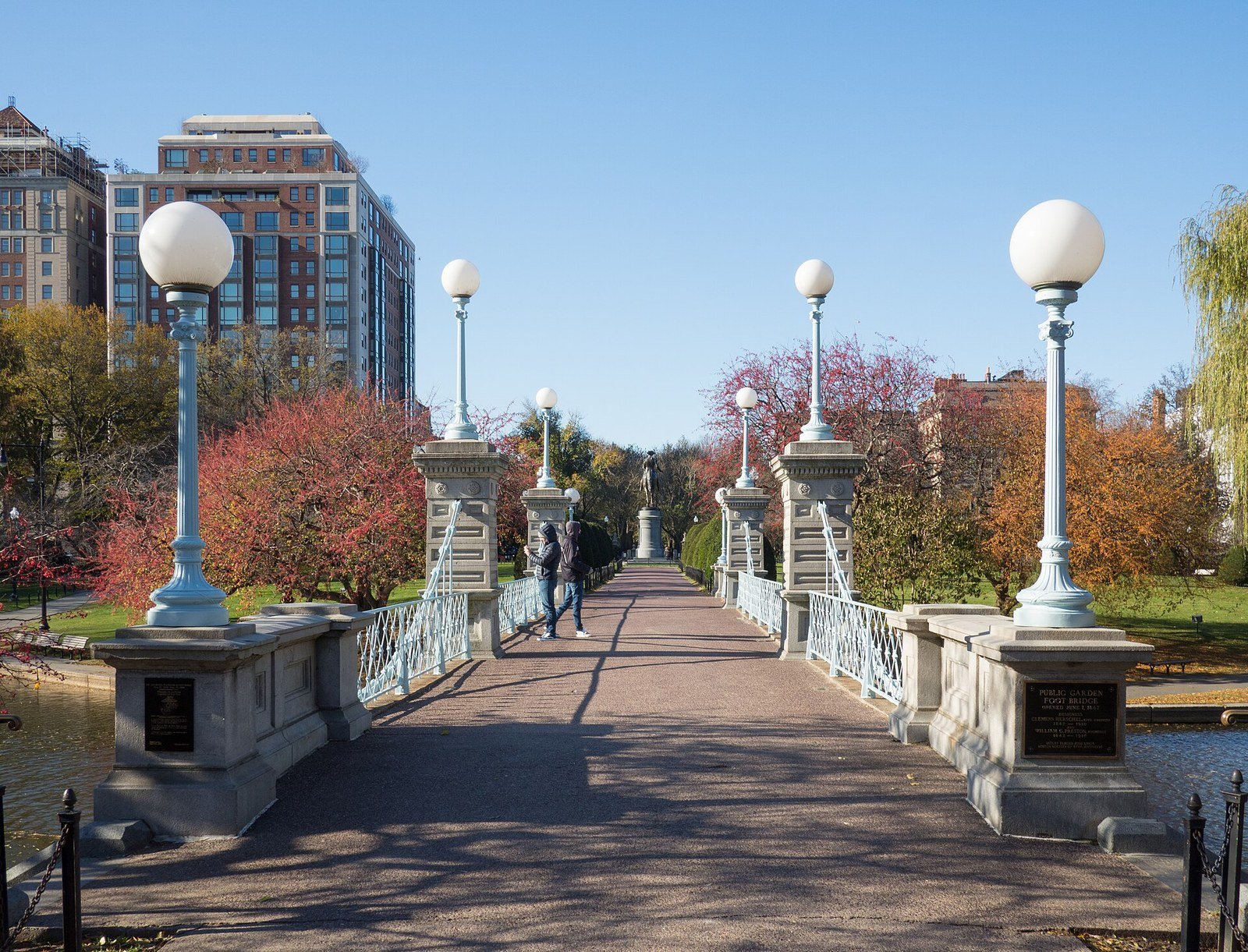
Beacon Hill is a short walk from almost everything in the center of the city. Brick sidewalks, gas lamps, Charles Street shops, and the Public Garden a few minutes away are the daily setting. You do not need a car for most errands, which is a large part of the appeal.
Hudson cites a Redfin median sale price of about $1.19 million on Beacon Hill in June 2026, basically unchanged from a year earlier, and a lower Zillow typical value of about $941,000. He then points to a Ford Realty MLS review from early 2026 that put three-bedroom and larger high-end homes on Beacon Hill in a range from about $3 million to well over $11 million, including full-floor units and single-family townhouses on streets such as Mount Vernon.
Louisburg Square sits in its own category. The small park in the middle is privately owned by the homeowners around it. Very few homes there come up for sale, and when one does, it tends to be a major event in this market.
Buyers also need to plan for design review. Beacon Hill is a historic district, and the Beacon Hill Architectural Commission reviews exterior work visible from a public way, including views from the Common, the Public Garden, and the Esplanade. The district's guidelines say roof decks and deck enclosures visible from a public way are inappropriate, and that materials such as brick, sandstone, lintels, sills, and stoops shall not be painted. For some buyers, those limits are frustrating. For others, the point is that the street is meant to look much the same in 20 years.
If you are comparing buildings, parking, and move-in rules in more detail, our Beacon Hill buyer guide is a useful next read.
Back Bay: Address, Walkability, and Price Per Square Foot
If Beacon Hill feels like a compact village of brick sidewalks, Back Bay is the broader boulevard version. Commonwealth Avenue runs through it with a long, tree-lined mall down the middle. On either side are 19th-century brownstones. Some have been kept as single-family homes, many have been divided into condos, and a few have been put back together as one large residence.
On the water side of Beacon Street, rear windows can look out on the Charles River, with the Esplanade for a morning run and Newbury Street a couple of blocks away. That is the lifestyle buyers are paying for, and it shows up more clearly in price per square foot than in a typical-value figure.
Hudson cites Zillow's July 2026 typical Back Bay home value at about $1.3 million, down 2.3% over the prior year. He also cites Movoto data showing Back Bay listings in August 2026 asking a median of about $1,500 per square foot, among the highest in the region. In practical terms, a 3,000-square-foot home in Back Bay can cost more than a 6,000-square-foot home farther out. You are paying for the address and the walkability, not for land.
A modest dip in typical values does not mean the neighborhood is fading. Hudson's read is that buyers at this level are selective. Homes with parking, private outdoor space, or direct elevator access still tend to move more quickly. Homes without those features often sit longer and leave more room to negotiate.
For a closer look at building type and what a similar budget buys in the suburbs, see our guides to Back Bay brownstones versus full-service condos and what about $5 million buys in Back Bay versus Weston.
Weston and Wellesley: Where the Typical Number Finally Lines Up
West of the city, the mix changes. In Weston and Wellesley, the typical home is not a condo. It is a single-family house on a real piece of land, so the published averages come closer to describing daily life.
For Wellesley, Hudson cites Zillow's July 2026 typical home value at about $2.05 million, up 4.5% over the prior year, with homes going pending in about 11 days. The town center is compact enough to walk to dinner, and the path around the lake by Wellesley College is a regular weekend loop. Downtown Boston is about 30 minutes away when traffic is light. Our Wellesley buyer guide covers villages, commuting, and teardown rules in more depth.
Weston is a little different, and the data sources diverge. Hudson cites a Zillow typical value of about $2.07 million, up 2% over the year, and a Redfin median sale price of about $2.7 million for the three months ending July 2026. That is a gap of about $600,000. Both can be right. Zillow is estimating every home in town, including older capes and ranches that rarely sell. Redfin is counting what actually closed, and in Weston a large share of those sales are larger, newer, or fully renovated homes, which pulls the sold median up.
The feel of Weston is quieter and more private: stone walls, conservation land, and not much of a commercial downtown. For buyers who want space close to Boston, that is the appeal. Our Weston moving checklist walks through the practical side of that kind of property, from septic to driveway access.
One reason these towns stay expensive is zoning. Building a Better Wellesley reports that as of 2024, 82% of the land area where it is legal to build housing in Wellesley is zoned solely for single-family homes. From a development standpoint, Hudson notes that rules like that cap supply. When demand keeps coming from hospitals, biotech, and finance, prices have a floor under them. It also shapes what gets built. In towns like these, the opportunity is often an older house on a strong lot, if you understand what zoning will allow before you buy.
Chestnut Hill, Belmont Hill, and West Cambridge
Hudson calls these the "quiet money" pockets. They do not always sit at the top of townwide lists, but some of the most substantial homes in Greater Boston are here.
Start with Chestnut Hill in Newton. Zillow's overall typical home value for Newton was about $1.37 million in the figures Hudson uses, which hides a lot. He points to Zillow sold records along Chestnut Hill Road with homes trading at $7.75 million, and nearby Essex Road sales above $7 million. Picture a brick Georgian on a large lot, with the Chestnut Hill Reservoir for a morning walk and Boston College close by.
Belmont's typical home value was about $1.35 million as of June 2026, up 6.8% over the year, one of the stronger gains among the places in the video. Belmont Hill is the part of town where the roads wind upward, lots get larger, and some homes have views back toward the Boston skyline. On a good day, Cambridge is about a 15-minute trip, even if the hill itself feels farther out.
Then there is West Cambridge, especially around Brattle Street. This is where a lot of the region's academic and innovation wealth has clustered. Brattle Street was once called Tory Row, and it is still lined with historic Georgian and colonial homes. Some sit on large lots, which is unusual this close to Harvard Square. A regular day can include a walk toward the Square, lunch in Huron Village, and a loop around Fresh Pond. Redfin's citywide Cambridge median sale price was $1.21 million in August 2026, basically flat year over year, but that figure is driven mostly by condos. A renovated estate on Brattle Street is a different market. If you are also shopping more broadly in the city, our Cambridge buyer guide is a good companion.
Many of the Highest-End Homes Never Hit the Public Market
The other half of Hudson's argument is simple: a lot of these homes are not online for anyone to see. At the top of the market, a household on Louisburg Square may tell a few agents first. A Weston owner may not want photographs of the house circulating widely. A West Cambridge property may go to a buyer who has been waiting for that exact street.
Those off-market sales happen because sellers want privacy, buyers want first access, and both want less noise. This is also where a development background matters. When Hudson walks a property, he is looking at lot size and zoning, not only the kitchen. Sometimes the strongest home in a town starts as an older house on land that can support something more, if the rules allow it.
The practical takeaway is to stop sorting by zip code and start thinking street by street: the block, the lot, the building type, and whether the home you want is likely to appear on a public site at all.
Thinking About a Move at This Level?
If you are buying, selling, or building in any of these areas, the Santana Team can help you narrow the streets that fit, explain what a lot can become, and watch for opportunities that may not show up on public listing sites. No pressure and no obligation.
Price figures in this article come from sources Hudson Santana cites in his October 29, 2026 video, including mid-2026 Zillow, Redfin, Movoto, and Ford Realty data, plus Building a Better Wellesley's 2024 zoning figure and the City of Boston's Beacon Hill Architectural Commission guidelines. Market conditions, list prices, and local rules can change, so confirm current information before making a decision. This article is not legal, tax, or financial advice.

Santana Team
| Santana Team | Keller Williams Boston Northwest
or another way