
Categories
Home Maintenance, Homeowner TipsPublished November 17, 2026
Winter Home Maintenance Checklist for Massachusetts Homeowners

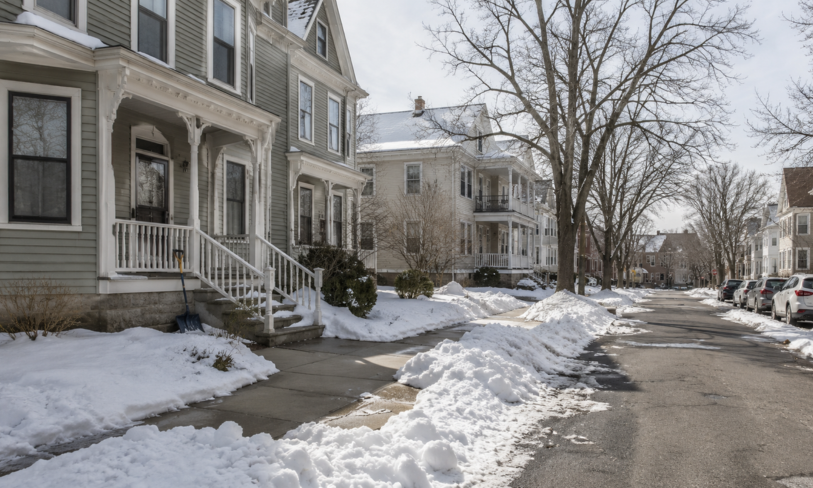
By mid-November in Massachusetts, winter is close enough that homeowners should have a plan for freezing temperatures, snow, ice, heating issues, and the occasional power outage.
This checklist is less about spending one frantic weekend “winterizing” your house and more about knowing what to monitor throughout the season. That includes protecting pipes, understanding local snow-removal rules, keeping heating and safety systems working, and knowing what to check after a storm.
If you are still working through your pre-winter projects, start with our Greater Boston winter home preparation guide. This checklist picks up where that one leaves off.
Massachusetts Winter Homeownership: Quick Numbers
48.6% of Massachusetts homeowners insurance claims: In 2024, nearly half involved non-flood water losses and freezing-related damage, according to the Massachusetts Division of Insurance.
Up to 15% potential energy savings: Mass Save says insulation and air sealing can lower heating and cooling costs by up to approximately 15%.
0% financing up to $25,000: Eligible Massachusetts homeowners may qualify for a Mass Save HEAT Loan for qualifying efficiency improvements.
After a snowstorm: Keep furnace, boiler, and dryer exhaust vents clear. Blocked vents can allow dangerous carbon monoxide to build up inside a home.
1. Know Where Your Main Water Shutoff Is
This is one of those homeowner tasks that seems extremely boring right up until water is spraying across your basement.
Find your home's main water shutoff and make sure you know how to operate it. If a pipe bursts, shutting the water off quickly can substantially limit damage while you wait for a plumber.
Older Greater Boston homes can make this more interesting than it should be. In multifamilies, converted condos, and homes that have been renovated over the years, valves and plumbing lines are not always where you would logically expect them to be.
If you live in a condo, also find out which plumbing is your responsibility and which portions are maintained by the association.
2. Pay Extra Attention to Pipes During Cold Snaps
Pipes running through exterior walls, unfinished basements, crawl spaces, and other poorly insulated areas are particularly vulnerable when temperatures plunge.
Before sustained freezing weather:
- Disconnect garden hoses.
- Shut off exterior water lines when applicable.
- Insulate vulnerable exposed pipes.
- Seal obvious gaps where cold air reaches plumbing.
- Keep the home adequately heated.
During extreme cold, the Massachusetts Division of Insurance recommends opening cabinets beneath sinks when necessary so warmer indoor air can circulate around plumbing. Depending on the location of the pipe, allowing a faucet to drip slightly can also help reduce the risk of freezing.
Read the Massachusetts Division of Insurance guidance on frozen pipes.
3. Keep Your Heating System on the Radar
Ideally, your boiler, furnace, or heat pump has already been serviced before mid-November. If not, there is still time to address maintenance before the coldest part of winter.
Throughout the season, watch for:
- Unusual noises or odors.
- Rooms that suddenly stop heating properly.
- Significant changes in heating costs.
- Leaks around boilers or related plumbing.
- Dirty furnace or HVAC filters.
- Blocked exterior exhaust vents.
After substantial snowfall, check exterior furnace, boiler, and dryer exhaust vents. Massachusetts emergency officials warn homeowners to keep vents clear because blocked exhaust can create a carbon monoxide hazard.
See Massachusetts snow-removal and winter safety guidance.
Own a Rental Property?
Massachusetts has specific heating requirements for residential properties. Under the State Sanitary Code, required temperatures are generally at least 68°F from 7 a.m. to 11 p.m. and 64°F overnight from September 15 through May 31, although local Boards of Health may modify the heating-season dates.
That makes reliable heating more than just a maintenance concern for landlords and real estate investors.
Review Massachusetts winter heating requirements.
4. Test Smoke and Carbon Monoxide Alarms
Winter means heating equipment, fireplaces, closed windows, and more time indoors, which makes working smoke and carbon monoxide alarms especially important.
Massachusetts requires working smoke alarms in homes, and most residences are also required to have carbon monoxide alarms. CO alarms generally need to be installed on every level, including habitable portions of basements and attics, with alarms within 10 feet of bedroom doors on levels containing sleeping areas.
Test your alarms regularly and check the manufacture date. Carbon monoxide alarms do not last forever, even if the battery does.
Review Massachusetts smoke and carbon monoxide alarm requirements.
5. Learn Your Town's Snow-Shoveling Rules Before the First Storm
There is no single Massachusetts deadline for clearing the sidewalk in front of your house. Local ordinances determine when and how property owners need to remove snow and ice, and the rules around Greater Boston vary considerably.
| Municipality | Snow Removal Deadline | Clearance / Important Notes |
|---|---|---|
| Boston | Within 3 hours after snowfall ends, or 3 hours after sunrise for overnight snow | Sidewalks and curb ramps generally need to be cleared at least 42 inches wide |
| Somerville | Within 6 daylight hours after snowfall ends | Clear a path at least 36 inches wide |
| Arlington | Residences: within 8 daylight hours | Apartment buildings and multi-unit condo properties have different requirements, including a shorter deadline |
| Cambridge | Within 12 hours after daytime snow, or before 1 p.m. after overnight snow | Ice has a separate removal or treatment deadline |
| Medford | Within 8 daylight hours after snowfall ends or a snow emergency is lifted, whichever is later | Check current city guidance before each winter |
Snow-removal rules, fines, and emergency procedures can change, so always check your municipality's current requirements before a storm.
If you hire someone to plow or shovel, arrange it before the forecast shows eight inches of snow and every plow operator in Eastern Massachusetts suddenly has 47 new best friends.
6. Stock Snow and Ice Supplies Before You Need Them
At minimum, homeowners should have:
- A snow shovel.
- Ice melt appropriate for your walkways and surfaces.
- A windshield scraper.
- Gloves and winter gear.
- A roof rake if appropriate for the property.
One useful Greater Boston stop is Tags Hardware in Porter Square, a longtime local option for the kinds of small home-maintenance supplies that become mysteriously difficult to find immediately before a storm.
If you use a snow-removal contractor, keep their contact information somewhere easy to find and confirm exactly what the service includes. A driveway plow does not necessarily mean someone is also shoveling the sidewalk, stairs, walkways, or access to utilities.
7. Watch Your Roof, Gutters, and Icicles
You do not need to climb onto the roof after every snowstorm. In fact, Massachusetts emergency officials recommend avoiding roof access whenever possible because roofs, ladders, snow, and ice are not an especially forgiving combination.
Instead, watch from the ground for:
- Large or growing icicles.
- Ice collecting along roof edges.
- Water staining ceilings or walls.
- Unusual leaks.
- Sagging roof areas.
- Gutters or downspouts blocked with ice.
- Doors or windows suddenly becoming difficult to open.
Some of these symptoms can indicate excessive snow load, water intrusion, or structural movement and deserve professional attention.
Flat and low-pitched roofs deserve particular attention after unusually heavy snowfall.
8. Clear More Than Just the Sidewalk After Snow
Once the shoveling is done, take a lap around the property.
Check that snow is not blocking:
- Heating equipment exhaust vents.
- Dryer vents.
- Basement windows needed for ventilation or emergency access.
- Exterior utility meters.
- Fire hydrants near the property.
- Catch basins or storm drains.
Meltwater needs somewhere to go. Keeping drains, gutters, and downspouts clear can help reduce refreezing and water problems as Massachusetts temperatures fluctuate above and below freezing.
9. Prepare for a Winter Power Outage
Greater Boston does not need a blizzard for the power to go out. Heavy wet snow, ice, and wind can all cause outages.
Massachusetts emergency officials recommend keeping an emergency kit capable of supporting your household for up to three days.
Before a forecasted storm:
- Charge phones and backup batteries.
- Make sure flashlights work.
- Keep food and water available.
- Know how you will stay warm if the power goes out.
- Keep necessary medications and supplies available.
- Sign up for utility and municipal emergency alerts.
If you use a generator, follow the manufacturer's instructions carefully and never operate it indoors, in a garage, or in another enclosed area.
Review Massachusetts winter storm safety recommendations.
10. Review Your Homeowners Insurance Before You Need It
Winter is a good time to confirm what your homeowners insurance actually covers rather than learning about exclusions while staring at water coming through a ceiling.
Review:
- Your deductible.
- Water and freezing-related coverage.
- Coverage for personal belongings.
- Temporary housing coverage.
- Any requirements when the property is vacant or temporarily unoccupied.
- Whether you have adequate replacement-cost coverage.
It is also smart to create or update a basic home inventory with photos or video and keep copies of important insurance and property records somewhere secure.
11. Have a Plan When You Leave Town
Holiday travel can create an awkward combination: colder weather and nobody home to notice a problem.
Before leaving:
- Keep the thermostat at 60°F or higher. The Massachusetts Division of Insurance recommends setting the thermostat no lower than 60°F when a home with hot-water heat is temporarily unoccupied during winter.
- Make sure exterior doors and windows are secured.
- Check vulnerable plumbing.
- Confirm the thermostat is operating correctly.
- Consider a low-temperature alarm or connected thermostat that can alert you remotely.
- Have someone who can access and check the property if needed.
- Arrange snow removal before you leave.
- Make sure your local contact knows where the main water shutoff is.
The Massachusetts Division of Insurance also recommends having a temporarily unoccupied home checked regularly. Homeowners should review their own insurance policy as well, since coverage for frozen or burst pipes may depend on whether reasonable steps were taken to maintain heat and protect the property.
Read Massachusetts guidance on protecting a home while temporarily unoccupied.
12. Use Winter to Identify Bigger Efficiency Problems
Some winter problems are really clues.
Persistent drafts, unusually cold rooms, ice dams, and high heating bills can indicate insulation, air-sealing, or ventilation issues rather than something you should simply accept every January.
Mass Save offers no-cost Home Energy Assessments to eligible Massachusetts residents. According to Mass Save, insulation and air sealing can reduce heating and cooling energy use by up to approximately 15%. Qualifying homeowners may also be eligible for a 0% HEAT Loan of up to $25,000 for certain efficiency improvements.
Program eligibility, incentives, and financing terms change over time, so verify current information directly with Mass Save.
Explore current Mass Save programs and incentives.
Keep a Simple Winter Home Log
You do not need another elaborate spreadsheet unless spreadsheets happen to bring you joy.
A simple note on your phone can be enough. Keep track of things like:
- When the heating system was serviced.
- Filter replacement dates.
- Recurring leaks or drafts.
- Where ice dams develop.
- Which pipes have frozen or come close.
- Contractors you used and trusted.
- Repairs that should happen in spring.
That information becomes surprisingly valuable when you are planning future improvements or preparing to sell.
Owning a Home in Greater Boston Means Knowing the House
After helping buyers and sellers through more than 1,700 closings throughout Greater Boston since 2014, we have seen how differently two homes on the same street can behave in winter.
A renovated Cambridge condo may have completely different responsibilities from a Somerville triple-decker, an Arlington single-family home, or an older Boston brownstone. The best winter maintenance plan starts with understanding your home's systems, knowing which issues deserve immediate attention, and keeping reliable local professionals within reach.
If winter maintenance is also making you think about bigger plans for your property, whether that means improvements, selling in the next year, or simply understanding its current value, our full team is here as a resource.
Market conditions, municipal rules, Mass Save incentives, insurance requirements, and other programs can change over time. Always verify current requirements and program terms with the appropriate city, town, state agency, insurer, or provider.

Santana Team
| Santana Team | Keller Williams Boston Northwest
or another way