

Categories
Local Real Estate, Home Buying TipsPublished October 20, 2026
Buying a Condo Conversion in Somerville: What Buyers Should Check

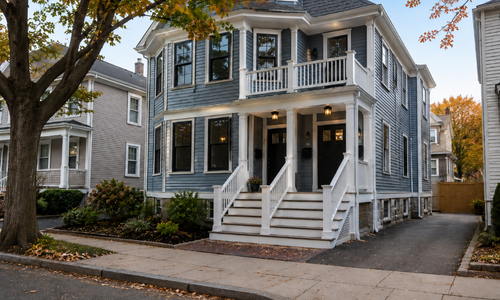
A newly converted Somerville condo can offer a combination that is hard to find in Greater Boston: the character and location of an older two- or three-family home with renovated interiors, updated systems, private outdoor space, parking, and a smaller condo association.
But buying a condo conversion is different from simply buying a renovated apartment.
You are not only buying the rooms inside your unit. You are buying into a newly created legal structure that determines which parts of the property belong to you, which areas are shared, how expenses will be handled, and what you can do with the property in the future.
The finishes tell you whether you like the condo. The permits, plans, documents, and association structure tell you what you are actually buying.
And in Somerville, there is another important question buyers need to ask: Has the property actually completed the City's condominium conversion process?
Our team has worked with Somerville condo conversions from both sides, helping owners create and sell individual units and helping buyers understand exactly what they are purchasing. Here are the questions we would want answered before a buyer closes on a newly converted condo.
1. Confirm the Somerville Condo Conversion Permit
This is the most Somerville-specific item on the list.
Residential properties being converted into condominiums in Somerville generally go through the City's Condominium Review Board. The City issues conversion permits by unit, which means different units within the same building can potentially have different requirements based on their previous use and occupancy.
For units whose last use was rental, the process can involve both a preliminary and final conversion permit. A final permit is issued after the applicable requirements associated with the preliminary permit have been satisfied.
Review the City of Somerville's condominium conversion process.
If you are considering a condo conversion, ask:
- What type of conversion permit applies to this unit?
- Has the applicable permit already been issued?
- If only a preliminary permit exists, what remains before the final permit can be issued?
- Has the seller already appeared before the Condominium Review Board?
- Is the proposed closing date realistic based on the permit status?
A beautiful kitchen cannot compensate for a permit issue that prevents the seller from closing when promised. Quartz has many talents. Municipal approval is not one of them.
Property owners considering the other side of the process can review our Somerville multifamily condo conversion guide for property owners.
2. Confirm That the Condominium Has Actually Been Legally Created
The Somerville conversion permit is only one layer.
In Massachusetts, a condominium is created through the recording of a Master Deed. The Master Deed describes the condominium, identifies the units and common areas, establishes percentage interests, and sets out important rights and restrictions.
The condominium will also have governing documents explaining how the association operates.
Massachusetts provides an overview of the documents used to create and govern a condominium.
Your real estate attorney should review the legal documents, but you should understand the basic answers too.
- Has the Master Deed been recorded?
- Have the condominium trust, bylaws, or other governing documents been recorded?
- Are there final site and floor plans?
- What percentage interest in the condominium belongs to your unit?
- Are there amendments or additional documents you need to review?
3. Understand Exactly What Comes With Your Unit
This is where condo-conversion due diligence becomes much more tangible.
Many condos in Somerville MA that were created from older multifamily homes include features such as:
- Parking
- Rear yards
- Patios
- Decks
- Porches
- Basement storage
- Garage space
- Roof decks
Do not rely solely on the listing description.
The condo documents and plans should tell you whether those areas are part of your unit, common property, or common property designated for your exclusive use.
Deeded vs. Exclusive-Use Parking
Buyers frequently ask whether a parking space is "deeded."
That is not the only way a condominium can give one unit the right to use a particular parking space.
In a small association, a parking area may be part of the common property while a specific space is designated for the exclusive use of one condo. Massachusetts condominium plans can similarly identify limited or exclusive-use common areas associated with particular units.
Massachusetts Land Court guidance addresses plans showing limited and exclusive-use common areas.
The practical questions are:
Where is your parking right documented, who has the right to use the space, and what restrictions apply?
The same principle applies to outdoor space and storage.
If the listing says "private yard," we want to see where that right appears in the condominium documents and plans.
4. Read the Condo Rules Before You Decide They Don't Matter
A two-unit or three-unit condo association can feel informal.
It is still a legal condominium association.
The Master Deed, trust or bylaws, and association rules can address issues including:
- Pets
- Rentals
- Smoking
- Parking
- Use of common outdoor areas
- Maintenance responsibilities
- Alterations
- Voting
- Common expenses
Two owners can absolutely figure things out together.
Two owners can also spend six months arguing about a fence.
The documents matter.
5. If the Documents Aren't Final Yet, Be Strategic About Changes
Buying early in a new condo conversion sometimes gives you an opportunity that buyers in established associations do not have.
Some of the condominium documents may still be in draft form.
That can mean there is room to request changes.
Maybe you would prefer a particular parking space. Perhaps you want a specific storage area or portion of the yard assigned to your unit. Pet language might matter to you.
Those can all be reasonable issues to raise.
But buyers should also think beyond their current needs.
A condo rule that works perfectly for you today can still affect your future resale.
Suppose you request an unusually restrictive pet provision because that happens to suit your household.
Three years later, you need to sell.
That same restriction may now reduce your future buyer pool, and changing recorded association documents may require cooperation from the other owners.
If the documents are still being drafted, use that flexibility thoughtfully.
6. Review the First-Year Condo Budget
An established condominium association may have years of budgets, meeting minutes, reserve balances, repair history, and actual operating expenses for you to review.
A brand-new condo conversion does not.
Someone has to estimate what it will cost to operate the new association.
Review the proposed budget and understand what has been included for:
- Master insurance
- Landscaping
- Snow removal
- Common electricity
- Water or sewer, if shared
- Routine maintenance
- Reserve contributions
- Professional or management expenses
- Other common costs
The important question is not simply whether the condo fee looks low.
A $200 monthly condo fee is not automatically better than a $350 fee if the first number simply ignores expenses that will eventually exist.
Buyers should understand both the projected operating costs and how the association expects to pay for future common repairs.
7. Check the Master Insurance
The condominium association generally carries master insurance covering the property and common areas according to the terms of its policy and governing documents.
Individual owners typically need their own condominium insurance based on what the master policy does and does not cover.
Before closing, your attorney, lender, and insurance professional should review the master policy.
You should understand:
- What the association's policy covers
- What you need to insure individually
- The master-policy deductible
- How the deductible may be allocated after a loss
- Whether the policy satisfies your lender's requirements
This is one of those thrilling adult documents nobody dreams about while touring a kitchen, right up until something leaks.
8. Confirm Your Financing Early
Do not assume that because you are pre-approved, every condo conversion will automatically work with your loan.
Condominium financing involves both the buyer and the condominium project.
The requirements can depend on the loan program, number of units, project structure, completion status, and other factors.
One particularly relevant distinction for Somerville is the treatment of small associations.
Under Fannie Mae's current guidance, project review is generally waived for eligible new and established two- to four-unit condo projects, although basic eligibility requirements still apply.
Review Fannie Mae's current project-review waiver guidance.
Larger new or newly converted condominium projects can face additional project-review requirements related to completion, legal documents, project characteristics, and other eligibility standards.
The buyer takeaway is much simpler than the lending manual:
Get the condo documents to your lender early.
Do not wait until the week before closing to discover that the lender has questions about the association.
9. For New Construction or Major Renovations, Check Completion and Occupancy Approvals
"Condo conversion" can describe very different properties.
One might be a century-old two-family that received renovations and was legally divided into two condos.
Another could involve a substantial reconstruction or an entirely new building.
If significant construction is involved, ask what municipal inspections and approvals remain before closing.
For new construction, a certificate of occupancy or other applicable municipal approval can be an important milestone.
For certain new or newly converted condominium projects that require a Fannie Mae Full Review, the current guidelines also include project-completion requirements.
See Fannie Mae's requirements for new and newly converted condo projects subject to Full Review.
Your attorney, lender, and buyer's agent should help determine which approvals matter for the specific property you are considering.
10. Inspect the Building, Not Just Your Newly Renovated Unit
Fresh finishes can make an older multifamily feel brand new.
The building may still be 100 years old.
Your inspection should help you understand the condition not only of the space inside your unit but also the major building components and common areas that you will partially own.
Depending on the property, that may include:
- Roof
- Foundation
- Exterior siding
- Porches and decks
- Drainage
- Common plumbing
- Electrical service
- Heating or cooling systems
- Basement
- Sewer or water infrastructure
- Retaining walls
- Shared stairs and hallways
It is also worth understanding what was actually renovated.
Were plumbing and electrical systems replaced, or was the work primarily cosmetic? Is the roof new? Were permits obtained for applicable work? Are utilities separately metered?
The fact that the refrigerator still has its protective plastic on it does not answer any of those questions.
11. Understand Who Pays for What
Small converted condo associations can divide maintenance responsibilities in ways that surprise buyers.
For example:
- Does each owner maintain their own deck?
- Is the roof a common association responsibility?
- Who maintains an exclusive-use yard?
- Who handles snow removal from the driveway?
- Is exterior window replacement an owner or association expense?
- If one unit has exclusive use of a roof deck, who pays when the roof underneath it requires work?
Do not assume that "exclusive use" automatically means "exclusive maintenance expense," or vice versa.
The governing documents should explain many of these responsibilities.
Understanding them before closing can prevent a considerably less entertaining discovery when the first repair bill arrives.
Somerville Condo Conversion Buyer Checklist
Before you close on a newly converted condo, we would want the major questions below answered:
| What to Check | What You're Trying to Confirm |
|---|---|
| Somerville conversion permit | The unit has completed, or is on track to complete, the applicable City conversion process |
| Master Deed | The condominium has been legally created and your unit is accurately described |
| Trust, bylaws and rules | You understand association governance and restrictions |
| Site and floor plans | Parking, yard, storage, decks and unit boundaries match what you were promised |
| Exclusive-use rights | Your parking and outdoor or storage rights are documented |
| Condo budget | Projected expenses and funding assumptions are reasonable |
| Reserve strategy | You understand how future common repairs are expected to be funded |
| Master insurance | Coverage, deductibles and individual insurance needs are clear |
| Lender review | Your financing works for this specific condominium |
| Municipal approvals | Applicable construction and occupancy approvals are on track |
| Inspection | Both the renovated unit and underlying building have been evaluated |
| Maintenance responsibilities | You know which expenses belong to you and which belong to the association |
What Is Different About Buying a Condo Conversion in Somerville?
Most of the due diligence above is useful when buying a newly converted condominium anywhere in Massachusetts.
The Somerville conversion permit is the extra local layer.
The City specifically regulates residential condo conversions through its Condominium Review Board, and a unit's prior rental or owner-occupancy history can affect the seller's conversion process and timeline.
That means a buyer's agent who understands Somerville condo conversions should be looking at more than comparable sales and finish quality.
They should understand enough about the process to recognize when another question needs to be asked.
One answer often tells you which three questions come next.
Local Somerville Gem: Nathan Tufts Park
One reason condo conversions are such a visible part of Somerville real estate is the city's mix of older two- and three-family housing.
A good place to see that residential character is around Nathan Tufts Park, also known as Powder House Park, near Powder House Square. The park is home to Somerville's historic Old Powder House, while the surrounding streets include the kind of older multifamily housing that has shaped the city's residential neighborhoods for generations.
A property that still looks like a traditional two-family from the sidewalk may now legally contain two separately owned condominiums. The architecture does not necessarily tell you how the ownership has been divided.
Frequently Asked Questions About Buying a Somerville Condo Conversion
How do I know whether a Somerville condo conversion has been approved?
Ask for information about the property's Condominium Conversion Permit and have your buyer's agent and attorney confirm its status. Somerville issues different permit types depending on a unit's prior use, and some rental conversions require both preliminary and final permits.
Should the Master Deed be recorded before I buy?
A Massachusetts condominium is formed through the recording of its Master Deed. Your real estate attorney should confirm the status of the condominium documents and determine what must occur before your closing.
Is exclusive-use parking the same as deeded parking?
Not necessarily. A parking space can be located within condominium common property while being designated for the exclusive use of a particular unit. Buyers should review the recorded plans and governing documents with their attorney to understand exactly what parking rights are included.
Can I ask the seller to change new condo documents?
Potentially, especially if documents have not yet been finalized or recorded. Buyers should also consider how requested changes to parking, outdoor space, storage, pet rules, or other restrictions could affect the other units and their own future resale.
Is buying a converted condo riskier than buying an established condo?
Not necessarily. The due diligence is simply different. An established association gives you operating history, prior budgets, and actual expenses to review. A new conversion requires more attention to how the condominium was created, its first-year budget, municipal approvals, legal documents, and future maintenance responsibilities.
Buying a Condo in Somerville? Know What You're Buying Before You Close
The best condo-conversion purchase is not simply the unit with the nicest kitchen or biggest yard.
It is the one where you understand the property from every angle: the physical home, municipal approvals, recorded rights, association structure, financing, and financial responsibilities that come with ownership.
The Santana Team has helped more than 500 clients since 2014 navigate Greater Boston real estate, with extensive experience in Somerville's multifamily homes, small condo associations, condo conversions, renovations, and new construction.
Our full team works with buyers throughout the process, from evaluating a property and reviewing comparable sales to coordinating questions with lenders, inspectors, and attorneys before important deadlines.
Browse current Somerville condos for sale.
Talk With the Santana Team About Buying in Somerville
Related Reading
Buying a Condo in Somerville: What's Different Here covers the broader Somerville condo-buying process, including small associations, financing, condo fees, and shared responsibilities.
Buying Into a New Condo Conversion: What Buyers Need to Know goes deeper into first-year association issues such as budgets, trustee roles, and what happens when a newly created association begins operating.
Converting a Multifamily to Condos in Somerville: Removal Permits & the Process explains the conversion process from the property owner's perspective.
Condo Conversions in Somerville: What Owners & Buyers Need to Know accompanies our Bridging the Market podcast discussion about condo conversions from both sides of the process.
Disclaimer: This article is intended for general informational purposes and is not legal, lending, insurance, or financial advice. Somerville's Condominium Conversion Ordinance, municipal procedures, condominium documents, lending guidelines, and property information can change over time. Buyers should confirm current requirements and property-specific details with the City of Somerville and qualified legal, lending, inspection, insurance, and real estate professionals.

Santana Team
| Santana Team | Keller Williams Boston Northwest
or another way