

Categories
Local GuidesPublished September 22, 2026
Cambridge Ended Single-Family-Only Zoning: What It Means for Property Owners

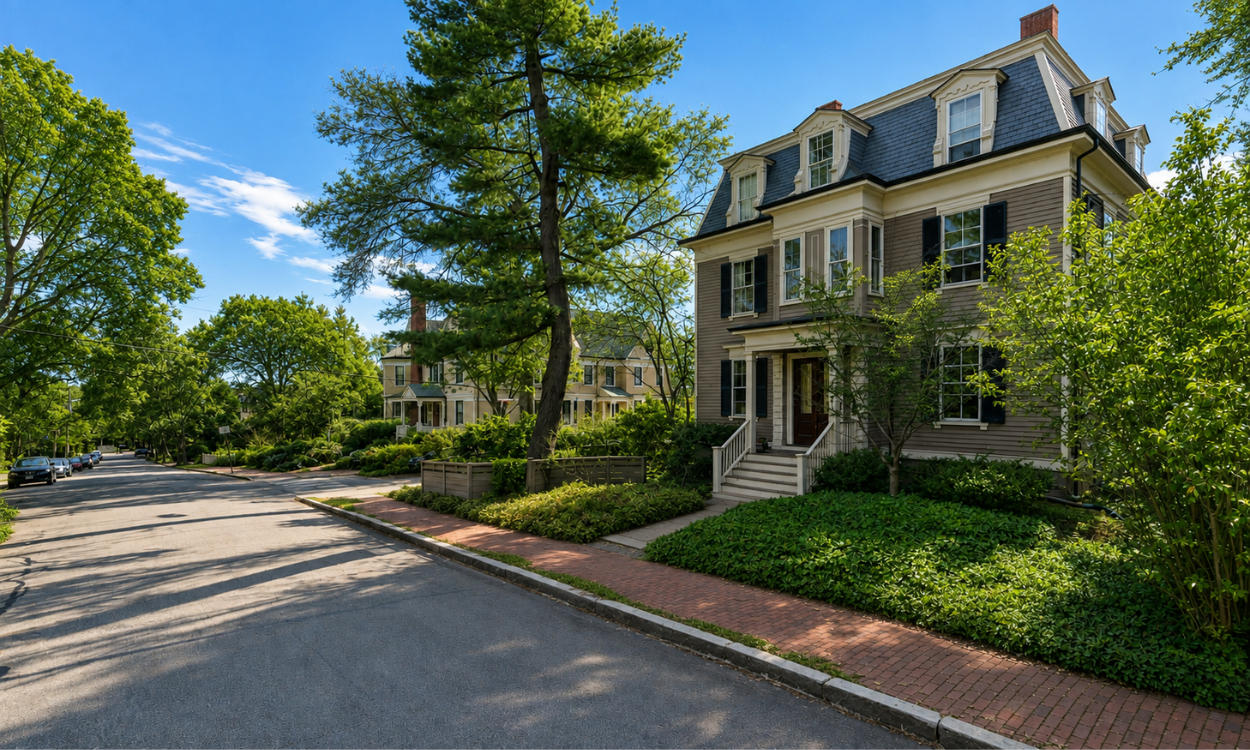
Cambridge made a major change to its residential zoning in February 2025.
The simplest way to explain it is this:
Cambridge effectively ended single-family-only and two-family-only residential zoning.
That does not mean single-family homes are banned. You can still own one, renovate one, build one, and sell one.
What changed is that many properties that were previously limited to one or two homes can now potentially support multiple homes instead.
For Cambridge property owners, that is the part of the zoning change that really matters.
A property that was once valued primarily as a single-family home may now also have value as the site of several future homes or condos.
And that can completely change the conversation about what the property is worth.
Cambridge Zoning Changes: The Short Version
- Single-family homes are still allowed. Cambridge did not ban them.
- Single-family-only and two-family-only zoning restrictions were removed. Multifamily and townhouse housing are now allowed throughout Cambridge, except in Open Space districts.
- Most residential neighborhoods are now Residence C-1. Residential buildings can generally reach up to four stories or 45 feet.
- Some qualifying projects can go higher. On lots of at least 5,000 square feet, qualifying inclusionary housing projects can reach up to six stories or 74 feet.
- Residential unit-count, minimum lot-size, and FAR limits were removed. The number of homes that may fit on a property now depends much more on the physical building envelope and other development requirements.
That does not mean every Cambridge property can suddenly become a large condo development. Lot size, setbacks, existing buildings, historic review, construction costs, and other requirements still matter.
But for many owners, there are now possibilities that simply were not available before.
What Does Ending Single-Family-Only Zoning Actually Mean?
Before February 2025, some Cambridge neighborhoods had zoning that permitted single-family or two-family housing but did not allow multifamily housing.
Cambridge changed that.
Today, single-family, two-family, townhouse, and multifamily housing are allowed throughout the city's zoning districts except Open Space.
The city also converted the former Residence A-1, A-2, B, and C districts into Residence C-1, which now covers almost all of Cambridge's residential neighborhoods.
So Cambridge did not eliminate single-family homes.
It eliminated many of the rules that said only a single-family or two-family home could be built on a particular residential property.
That one word, "only," makes a very big difference.
You can review the city's explanation of the changes on the City of Cambridge Multifamily Housing Zoning page.
Cambridge Residential Zoning: Before and After
For a property owner, this is the easiest way to see how significant the change was:
| Before February 2025 | Today in Residence C-1 |
|---|---|
| Some neighborhoods allowed only single- or two-family housing | Single-family, two-family, townhouse, and multifamily housing are allowed |
| Zoning limited the number of homes based partly on lot size | No residential maximum unit count |
| Minimum lot-size and lot-area-per-unit rules restricted density | Those residential lot-size requirements were removed |
| Residential FAR limited how much floor area could be built | Residential FAR limits were removed |
| Residential height rules varied among the former zoning districts | Base residential height is generally 4 stories or 45 feet |
| More housing could require zoning relief depending on the proposal | Qualifying projects on 5,000+ sq. ft. lots can reach 6 stories or 74 feet when inclusionary requirements are met |
Does Cambridge Still Allow Single-Family Homes?
Yes.
Existing single-family homes can remain. New single-family homes can still be built.
Nobody is required to convert a house into condos, add units, or redevelop a property.
The change is about giving property owners more options.
A Cambridge homeowner can still decide that keeping a property as a single-family home is the best use of it.
But zoning may no longer require that to be the only option.
Could a Cambridge Single-Family Home Become Condos?
Potentially, yes.
This is one of the biggest real estate implications of the zoning change.
Imagine a Cambridge property that currently contains one single-family home.
Before the 2025 changes, the property's zoning might have prevented that site from being redeveloped into several homes.
Today, depending on the lot, zoning district, building design, setbacks, historic requirements, and other regulations, that same property may potentially support multiple dwelling units.
Those homes could potentially be legally structured as condominiums, allowing individual units to be owned and sold separately.
The important question for Cambridge homeowners has changed.
Instead of only asking:
"What is my house worth as a single-family home?"
it may now be worth asking:
"What is this property worth based on what could potentially be built here?"
The zoning change does not automatically turn a single-family property into condos, and it does not guarantee how many homes could be built.
But it can change the property's potential use, buyer pool, and value.
Why Could the Zoning Change Affect Your Property's Value?
Because the potential buyer pool may have changed.
A Cambridge single-family home already appeals to someone who wants a detached home in the city and can afford one.
But if the same property could potentially support several future homes, another category of buyer may also become interested:
builders and real estate investors.
They may evaluate the property very differently from someone planning to live in the existing house.
A builder may care about:
- The size and shape of the lot
- What current zoning allows
- How many homes could realistically fit
- Whether the existing building should remain
- What finished condos could potentially sell for
- Construction and financing costs
- Historic or other development restrictions
That does not mean a builder will automatically pay more than a traditional homebuyer.
It means the property may need to be analyzed in more than one way before deciding what it is worth or how it should be marketed.
What Are the Basic Residence C-1 Rules?
Most residential neighborhoods in Cambridge are now zoned Residence C-1.
For most property owners, the key numbers are fairly simple:
Base residential height: Up to 4 stories or 45 feet
Qualifying inclusionary projects: Up to 6 stories or 74 feet on lots of at least 5,000 square feet
Cambridge also removed residential minimum lot-size requirements, maximum unit counts, and residential FAR limits.
In plain English, the city is relying much more heavily on what kind of building can physically fit within the applicable rules instead of simply limiting a property to a certain number of homes.
Can You Build as Many Units as You Want?
No.
Cambridge no longer sets a simple maximum number of residential units, but that does not mean the number of homes is unlimited in practice.
A proposed building still has to work on the actual property.
Things like building height, setbacks, open space, building and fire codes, historic review, trees, access, and other site requirements can all affect what is realistic.
And then there is the question zoning cannot answer:
Does it make financial sense to build it?
A property may theoretically support more housing and still be worth more as the existing single-family home.
A larger project may also cost so much to design, finance, and construct that a smaller development makes more sense.
Zoning creates options. It does not guarantee that every option is a good investment.
What About Cambridge's Affordable Housing Requirements?
Project size matters here.
Cambridge's Inclusionary Housing Program generally applies when a new residential development creates 10 or more new homes or more than 10,000 square feet of residential space.
When the program applies, 20% of the residential floor area must generally be devoted to income-restricted affordable housing.
That means someone creating a few new condos is dealing with a very different development equation from someone proposing a much larger residential building.
For most homeowners, the important takeaway is simply this:
The bigger the project, the more requirements may come into play.
Do You Have to Completely Redevelop a Property to Add Housing?
No.
One of the interesting early effects of Cambridge's zoning changes is that some property owners are looking at ways to add homes to existing sites, rather than simply demolishing an existing house and starting over.
Depending on the property, that might mean adding units within an existing building, expanding it, or pursuing another small-scale housing option.
For homeowners considering just one additional accessory dwelling rather than a larger multifamily or condo project, Massachusetts also changed its statewide ADU rules in 2025.
Our Massachusetts ADU Guide for Greater Boston Homeowners explains how accessory dwelling units work, including size, parking, owner occupancy, and the different ways an ADU can be added to an existing property.
Does Every Cambridge Single-Family Home Now Have Development Potential?
Not necessarily.
This is probably the most important reality check in the entire discussion.
Two Cambridge homes that look fairly similar from the street can have very different possibilities.
One may sit on a larger, straightforward lot where several future homes are relatively easy to envision.
Another may have an unusual lot shape, historic restrictions, difficult access, significant trees, a valuable existing structure, or construction economics that make redevelopment impractical.
And sometimes a Cambridge single-family home is simply worth more to someone who wants to live in it than a builder can justify paying for the land.
There is no universal formula.
What About Cambridge's Historic Homes?
Historic review can be an important part of this conversation.
The 2025 zoning changes did not eliminate Cambridge Historical Commission review or historic district requirements.
That matters in a city with a substantial stock of older homes and established historic neighborhoods.
Our team is currently involved with a property in East Cambridge where historic review is part of the development process. In situations like that, the question is not simply:
"How much does the zoning allow?"
It can also become:
"How can additional housing be created while working with the existing building and historic context?"
That is one reason two lots with the same zoning can still have very different realistic development options.
What Are We Actually Seeing Since the Cambridge Zoning Change?
We now have more than a year of early data.
In its March 2026 Annual Housing Review, Cambridge reported 11 six-story multifamily proposals since the rezoning, including seven located primarily in Residence C-1.
But the more interesting trend for many homeowners may be happening on smaller properties.
The city has reported:
- More small multifamily and townhouse proposals
- More projects adding homes to existing properties
- Fewer "downconversions" where the number of homes on a property is reduced
Cambridge has also cautioned that it is still early and that construction costs, financing, and other economic conditions continue to affect which proposed projects actually get built.
This fits into a broader change we have been watching across Greater Boston. In our August 2026 Greater Boston Market Update, Hudson discusses how zoning changes in Cambridge and Somerville are beginning to contribute to new housing inventory and create more options for buyers.
Could This Create More Condos in Cambridge?
Potentially.
Cambridge already has a substantial condo market, but allowing more housing on residential lots creates new opportunities for smaller condo developments in places where adding multiple homes was previously much harder.
A property that remained a single-family home partly because zoning required it may now potentially become several residences.
If those homes are legally established as condominiums, each could eventually be owned and sold individually.
It will take time for zoning changes to work their way through design, permitting, construction, and eventually into completed homes for sale.
But the early project activity shows that property owners and builders are already exploring what the new rules make possible.
What Does This Mean If You're Thinking About Selling?
If you own property in Cambridge, particularly a single-family home, it may be worth understanding the development potential before deciding how to price or market it.
Your best buyer might still be someone who wants to live in the house exactly as it is.
But it could also be:
- A builder
- A real estate investor
- A homeowner interested in adding units
- A buyer interested in the property's long-term redevelopment potential
That broader buyer pool can change the strategy.
In some cases, the value of the lot and what it could become may be just as important as the value of the house standing on it today.
What If You Don't Want Your Neighborhood to Change?
The zoning changes have been controversial, and there are reasonable perspectives on both sides.
Supporters argue that Cambridge needs more housing and that allowing more homes in more neighborhoods can increase housing supply and create more opportunities for people to live in the city.
Other residents have raised concerns about larger buildings next to smaller homes, neighborhood character, privacy, trees, traffic, parking, and the pace of redevelopment.
The zoning does not require anyone to redevelop a property they want to keep as a single-family home.
What it does is give more property owners the option to consider additional housing.
What Should Cambridge Property Owners Do First?
If you own a Cambridge property and are wondering whether the zoning changes affect you, you do not need to start by hiring an architect and designing a six-story building.
Start with the property itself.
1. Understand What You Own
Look at the lot, existing building, zoning district, surrounding development, and any obvious historic or site considerations.
2. Identify the Realistic Possibilities
Could the existing building support additional homes? Could the lot potentially accommodate a larger redevelopment? Would keeping the existing home make more sense?
3. Compare the Different Values
What is the property worth as it exists today?
What might a traditional homeowner pay?
What might a builder or investor pay based on the development potential?
What could the finished homes or condos realistically sell for?
4. Then Decide Whether Deeper Feasibility Work Makes Sense
If the real estate analysis suggests there may be an opportunity, that is when architects, attorneys, engineers, contractors, and city officials can help determine exactly what can be approved and built.
That order can save a homeowner from spending significant time and money studying a development idea that never made financial sense in the first place.
A Local Cambridge Perspective
Cambridge is a city where very different types of housing already sit close together.
Cambridgeport, Mid-Cambridge, East Cambridge, North Cambridge, and Strawberry Hill each have their own mix of detached homes, two- and three-family buildings, condos, larger residential buildings, commercial areas, and transit.
The same zoning change can therefore create very different opportunities depending on the property and neighborhood.
A Cambridge Local Gem: Fresh Pond Reservation
Fresh Pond Reservation offers more than 150 acres of open space surrounding the city's drinking-water reservoir.
It is a useful reminder of what makes Cambridge land-use decisions so complicated: housing, transportation, historic buildings, trees, open space, businesses, and public infrastructure all have to fit within a relatively small city.
Related Greater Boston Zoning & Housing Guides
Cambridge is not the only local community where zoning changes are creating new housing options.
- Massachusetts ADU Guide: What Greater Boston Homeowners Should Know
- ADU vs. Backyard Cottage in Somerville: What's the Difference?
- What Are Backyard Cottages? Somerville's Small-Scale Housing Trend Explained
- August 2026 Greater Boston Market Update: Cambridge Zoning Changes
Could Your Cambridge Property Have More Potential Than You Think?
If you own a property in Cambridge, especially a single-family home, the 2025 zoning changes may have changed more than what can be built.
They may have changed who would want to buy your property and how it should be valued.
The Santana Team is already working with Cambridge property owners to compare the value of the existing home with its potential as a larger residential or condo development.
Our team has worked with 56 developers and investors on 111 projects representing 385 completed units and more than $483 million in sales across 25 Massachusetts towns, giving us experience evaluating both sides of the equation: what a property may support and what the finished homes can realistically sell for.
Because we're a full team, we can help with the real estate and market analysis while you work with the appropriate architects, attorneys, engineers, contractors, and city departments to confirm what can actually be approved and built.
Wondering What Your Cambridge Property Could Become?
Before you renovate, redevelop, or sell, we can help you compare the property's value today with the potential value created by Cambridge's new zoning rules.
Cambridge zoning, permitting requirements, development standards, construction costs, and real estate market conditions change over time. This article reflects information available as of August 2026 and is intended for general informational purposes only. It is not legal, zoning, architectural, engineering, tax, financing, or permitting advice. Confirm current requirements for a specific property with the City of Cambridge and qualified professionals.

Santana Team
| Santana Team | Keller Williams Boston Northwest
or another way